


Who up Refurbing they Tom to Hot Tomata? Who up Refurbing they Tom to Hot Tomata? Who up Refurbing they Tom to Hot Tomata? Who up Refurbing they Tom to Hot Tomata? Who up Refurbing they Tom to Hot Tomata? Who up Refurbing they Tom to Hot Tomata? Who up Refurbing they Tom to Hot Tomata? Who up Refurbing they Tom to Hot Tomata? Who up Refurbing they Tom to Hot Tomata? Who up Refurbing they Tom to Hot Tomata? Who up Refurbing they Tom to Hot Tomata? Who up Refurbing they Tom to Hot Tomata? Who up Refurbing they Tom to Hot Tomata? Who up Refurbing they Tom to Hot Tomata? Who up Refurbing they Tom to Hot Tomata? Who up Refurbing they Tom to Hot Tomata? Who up Refurbing they Tom to Hot Tomata? Who up Refurbing they Tom to Hot Tomata? Who up Refurbing they Tom to Hot Tomata? Who up Refurbing they Tom to Hot Tomata? Who up Refurbing they Tom to Hot Tomata? Who up Refurbing they Tom to Hot Tomata? Who up Refurbing they Tom to Hot Tomata? Who up Refurbing they Tom to Hot Tomata? Who up Refurbing they Tom to Hot Tomata? Who up Refurbing they Tom to Hot Tomata? Who up Refurbing they Tom to Hot Tomata? Who up Refurbing they Tom to Hot Tomata? Who up Refurbing they Tom to Hot Tomata? Who up Refurbing they Tom to Hot Tomata? Who up Refurbing they Tom to Hot Tomata? Who up Refurbing they Tom to Hot Tomata? Who up Refurbing they Tom to Hot Tomata? Who up Refurbing they Tom to Hot Tomata? Who up Refurbing they Tom to Hot Tomata? Who up Refurbing they Tom to Hot Tomata? Who up Refurbing they Tom to Hot Tomata? Who up Refurbing they Tom to Hot Tomata? Who up Refurbing they Tom to Hot Tomata? Who up Refurbing they Tom to Hot Tomata? Who up Refurbing they Tom to Hot Tomata? Who up Refurbing they Tom to Hot Tomata? Who up Refurbing they Tom to Hot Tomata? Who up Refurbing they Tom to Hot Tomata? Who up Refurbing they Tom to Hot Tomata? Who up Refurbing they Tom to Hot Tomata? Who up Refurbing they Tom to Hot Tomata? Who up Refurbing they Tom to Hot Tomata? Who up Refurbing they Tom to Hot Tomata? Who up Refurbing they Tom to Hot Tomata? Who up Refurbing they Tom to Hot Tomata? Who up Refurbing they Tom to Hot Tomata? Who up Refurbing they Tom to Hot Tomata? Who up Refurbing they Tom to Hot Tomata? Who up Refurbing they Tom to Hot Tomata? Who up Refurbing they Tom to Hot Tomata? Who up Refurbing they Tom to Hot Tomata? Who up Refurbing they Tom to Hot Tomata? Who up Refurbing they Tom to Hot Tomata? Who up Refurbing they Tom to Hot Tomata? Who up Refurbing they Tom to Hot Tomata? Who up Refurbing they Tom to Hot Tomata? Who up Refurbing they Tom to Hot Tomata? Who up Refurbing they Tom to Hot Tomata? Who up Refurbing they Tom to Hot Tomata? Who up Refurbing they Tom to Hot Tomata? Who up Refurbing they Tom to Hot Tomata? Who up Refurbing they Tom to Hot Tomata? Who up Refurbing they Tom to Hot Tomata? Who up Refurbing they Tom to Hot Tomata? Who up Refurbing they Tom to Hot Tomata? Who up Refurbing they Tom to Hot Tomata? Who up Refurbing they Tom to Hot Tomata? Who up Refurbing they Tom to Hot Tomata?
Submissions Closed
Submissions for CSR 172 have now closed. Since our previous post, Wrekt and I have recieved complete submissions from -
@DrDoomD1scord
@66mazda
@WumboSized
@_4bigguys
@superbiirdd
@Fantic2000
@EnCR
We are still awaiting ads from -
@moroza
@titleguy1 and @DoctorNarfy
@Tsundere-kun
@Nebulon, @Vanilla, @Koviico, and @Cyder0719
12 hours remain to post your ads on the challenge thread, and a timer is linked below.
 watch
 anime

 desu ka? Not sugoi desu! Watashi
 am learning


 japanese


 through all
 the anime
 desu. Nani


 about the basics

 desu ka? so Have anata seen
 Yaiba desu ka? sou desu ka? What have you
 desu nyaa~ SUGOIIIIIII DOMESTIC
 NA
 KANOJO IS KAKKOUII DESU NE


 Watashi
 so desu Kore wa
 a fun
 conversation
 !!! Watashi
 about anime’s
 nuzzles
 ~murr~ hehe

 desu!! Its hilarious


 desu! Anata should also
 watch
 Piece
 >.< Watch
 episode
 , anata will get
 hooked desu yo
 ! Anata should also
 watch
 strongest, its sugoi desu Sumimasen! Watashi
 desu! Watashi
 to sleep
 >.< Have a konbanwa!!


A totally on time™️submission and ad (wow this bit again) By Walmart Sendo, aka @Koviico, @Nebulon, @Cyder0719, and @Vanilla.

FS: 1998 Norðwagen Freya GT6.4, $8415.58
AKA the Family Tank

We bought this at the height of the dotcom bubble, drove around the continent with kids, grandkids, their friends, dogs, their kids’ dogs’ kids, the kitchen sink, and all the partridges in the pear tree. Even had the tree on the roof at one point; sturdy Hetvesian steel (AHS!) roof with no sunroof. Now that the kids are out of the nest, we just don’t need something this big anymore.
This is a GT trim, Noodlewagon’s alphabet soup for a relatively squishy, plush cruiser to go Touring with, that’ll relieve you of a few extra Grand up front compared to the base T trim. Among other bits, you get five full-sized bison leather seats with heating and 3-point belts. Foreshadowing NHTSA’s own realization that year that US airbags were overpowered, this one has a legal minimum of them, and relies on the advanced high strength steel unibody for safety.
Options on this one include:
- 19-speaker Butzenkatzen audio
- Third-row foldaway bench
- Manual transmission. Hard to find like this in the US, but it was the price of a certain someone’s
remarkably childish petulance about not getting a sports carcompromise. - Sport shadowline trim (we thought the stock GT stuff was a bit gaudy and heavyhanded).
- Atmospheric six, apparently an unintended one-year-only configuration for the Freya and related Odin models. Something about OBD2 compliance hiccups for the earlier (<=96) ones, but the later (>=98) ones weren’t ready, so as a stopgap they took a much hotter six out of some sports car and did their best to civilize it on short notice.
The active suspension is standard on these, and unlike the older hydropneumatic setup, the only maintenance needed is a periodic greasing, inspection, and the odd contact cleaning. This and all other tasks are up to date, all in a bigass binder with receipts. The center brake light is out and the rear window defrost is intermittent, which together point to hatch wiring. No other issues.

CSR 172 - Phase 0 (instabins)
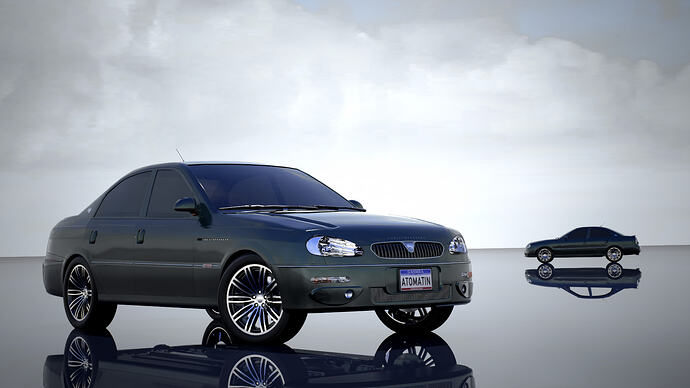
@ac09 - Christoffersen MS 350 Sterk
Kicking off the search for my next car, the first thing I’m greeted by is an ad for the Christoffersen MS 350. Looking at the pictures, and reading through some of the specs - I was put off by the design, with its odd door handles, huge wheels and tall ride height, and things like the 19-inch wheels and hydraulically controlled automatic struck me as weird. Regardless, when I reached out to the dealership about setting up an in-person showing, they couldn’t find the car in their system, and ultimately that was my sign to move on.
End Result - Instabinned. The MS 350 breaks two rules - one, it does not follow the naming scheme outlined in the challenge brief, and two, it produces positive downforce on the aerodynamics graph, which was expressly banned. Rulebreaks aside, the design was weak with a disproportionate and awkwardly jammed together front fascia, huge wheels with a silly ride height, odd door handles, and the body color window trim was weird as well. Engineering also had a lot of problems - 19-inch wheels for no reason, silly amounts of tire stagger, CVVL but no VVT, a non-advanced automatic on what was clearly intended to be a premium car in the late 1990s, all of which contributed to pretty poor stats across the board.
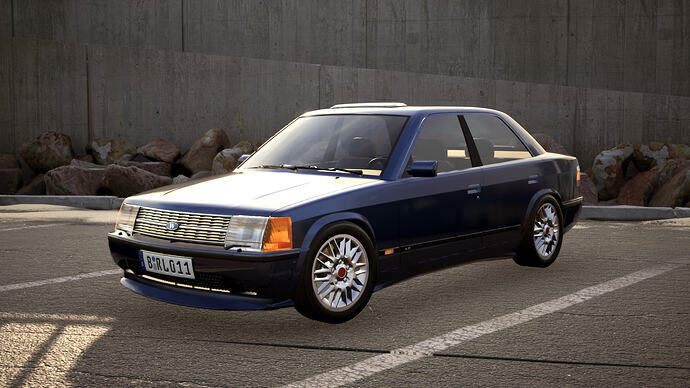
@ProbablyWastingTime - Weitrovaus 940xs Saloon
Moving on to another ad, I began looking at the Weitrovaus 940xs. However, reading through the specs and looking at the pictures, I realized that it was smaller than I wanted, it doesn’t have enough seats, and it uses higher grade fuel than what is readily available in my area. Due to those reasons, I decided against it, and moved onto the next car.
End Result - Instabinned. The 940xs breaks 3 rules - it was below the minimum wheelbase of 2.7m rounded, it doesn’t have 5 full seats, and it uses 98 RON fuel, which was over the maximum allowed 95 RON fuel. Design wasn’t really an issue, it was generally fine, but the wheels are arguably too big, it lacks a little depth, and the front overhang was a little too short. Engineering had problems - really narrow rear tires with wider front tires for some reason, a full space frame, a tiny V8 with ITBs that it doesn’t even really utilize because it’s so down on power, and statistically it was very weak.
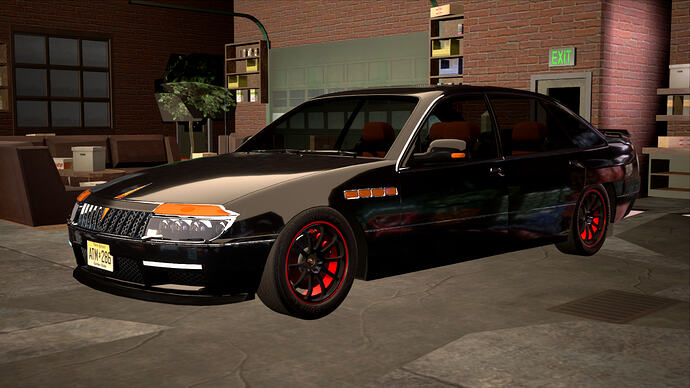
@Rise_Comics - Platinum Roadyacht AeroBlack
The next ad I looked at was for a Platinum Roadyacht in the desirable AeroBlack trim, and immediately I was stunned by one figure in particular - 546 horsepower - a crazy figure in a lot of cars, but especially in a large sedan from the mid 1990s. However, even with the big power, it was pretty slow off the line, and based on the other pictures, I was no fan of the exterior design, and it didn’t have the right amount of seats, and so I closed its tab and moved to the next car.
End Result - Instabinned. The Roadyacht is the first car to only break one rule - it only has 4 full seats, below the 5 required in the ruleset. That aside, the design is very weak, with enormous headlights that are awkward looking at best, ridiculous red trim on the wheels, strange proportions, and overall it felt very thrown together. Engineering was a series of major mistakes - 546hp which is frankly stupid in 1996, active suspension components way too early, solid disc brakes on all 4 corners which also feels stupid given the power output, twin turbos that might as well not be doing anything at all because you didn’t tune them to do anything - this has the power curve of a high strung NA engine, not a turbocharged one. Additionally, despite having nearly 550 horsepower, off-the-line acceleration is pretty bad, which I think can be partially explained by the gearing -

All in all, a very poor showing.
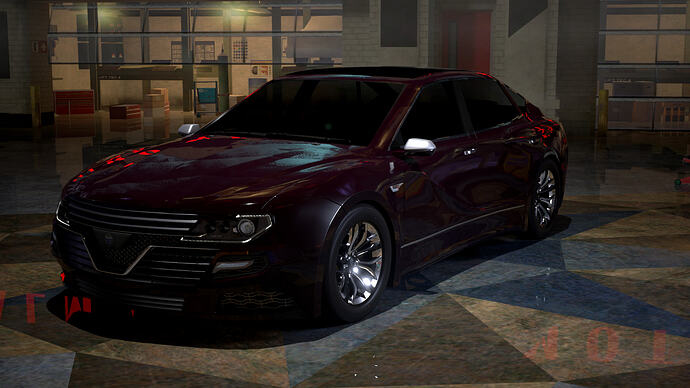
@nightwave - Hydrion Orca SL
The next car I looked at was the Hydrion Orca - and immediately, my first impression was that the design was very jagged and messy, with a mashup of ideas and shapes on the front that had no defining element, and busy side surfacing that reads as messy, rather than avant-garde. However, upon contacting the dealership to set up an in-person viewing, I was told that the Orca had not yet arrived at the dealership, and as I was iffy on it to begin with - I decided to move on.
End Result - Instabinned. The Orca somehow makes one of the less egregious rule breaks here - it was significantly over techpool, as it seems that you used the techpool menu that lets you set it for an entire company, rather than the menu inside the car designer itself. As a result, the actual techpool of the individual car was well over the mandated limit of 55m. Design has its problems, mostly that the front fascia is messy and sorta just thrown together with reckless abandon, the side surfacing is messy, and the rear design was boring and too simple. Engineering was close to being fine, but you made strange choices like the sequential variable-geometry turbo setup and semi-trailing arm rear suspension, which affected the overall stats in adverse ways. Overall, it’s one of the less objectionable cars here, but rules are still rules.
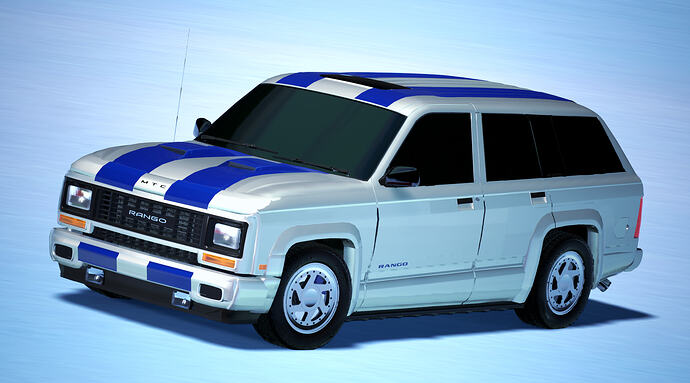
@_4bigguys - MTC Rango Maelstorm
The next car I looked at was the MTC Rango, and first impressions were strong - the exterior design was very handsome and easy on the eyes, but I didn’t love the shape and size of the rear side doors, and there seemed to be a rather large gap in the bodywork on the rear of the car. However, upon reading through the Rango’s specs, I found that it came with a set of very expensive and hard to find OEM tires, and based on some cursory research I found that it would be very expensive to replace said tires if I ever needed to, so I closed the tab and moved onto the next car.
End Result - Instabinned. The MTC breaks 2 rules - it doesn’t have 4 doors as required by the rules, and it was well over the maximum +5 quality allowed on tires. Aside from that, the design was really excellent, though I didn’t care for the way you cut the rear doors into the body, which would be too narrow to be useful anyways, and there was a fairly sizable gap between the very bottom of the tailgate and the top of the rear bumper. Engineering was a mess - 1996 is way too early for direct injection on this kind of car, the wheels are too large and them being made of magnesium was kind of a strange choice, and semi-active suspension parts were out of place. Gearing was weird too, and overall it scored very poorly in nearly all of the judged stats.

@Fantic2000 - Condor Scout GT/S
In the next tab was the Condor Scout GT/S, which on first impression I really enjoyed, finding it to be very gorgeous, cunty and fierce, but I thought it maybe rides a little too low, and the 21-inch wheels seemed too big on first glance. However, the bigger issue lied within - the Scout did not have 5 full seats, which was a must-have for my next car, and because of that, I closed its tab and moved onto the next car.
End Result - Instabinned. This one hurts for a lot of reasons, but the Scout ends its run here due to not having 5 full seats as required by the rules. Design was not the problem at all - I thought it was really handsome and well executed, though if I had any notes, I think the wheels were a touch too big at 21 inches. Engineering had some issues too, but I would argue that poor stats are almost realistic in a sense - I wouldn’t expect the Scout to be the most drivable, or the most comfortable, or the most efficient - and it isn’t. I want to like it so bad, but the rules are the rules, and because of that - the Scout falls off here.
And last, but certainly not least..
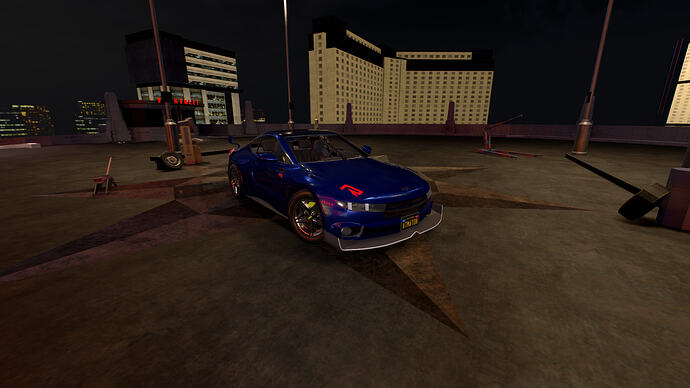
@Pro_Mcsnipe - Rourke MantaR
No in-context writeup for this one - Wrekt and I were astounded at how many rules you broke in one go - to the point that it would almost be easier to tell you what rules you didn’t break. Rules aside, the design is just bad and overwrought, with a huge boyracer-y front splitter and rear wing, silly giant Rs all over the car, I could go on but I’ll just leave it at how it completely missed the point of the brief. Engineering is no better - it scores at or among the lowest in the entire challenge across every judged stat, and the core engineering decisions are shaky at best. As for the rules you broke, well;
- Doesn’t have 4 doors as per the ruleset
- The wheelbase is below the minimum of 2.7m rounded
- It doesn’t have 5 full seats
- It’s well over the techpool limit of 55m combined
- It has positive downforce on the aerodynamics graph, which was disallowed
- It uses 98 RON fuel, which is higher than the 95 RON maximum allowed in the rules
- It doesn’t have ESC, which was mandated on all 2005 and newer cars as per the rules
- 7 rules. In 6 years of hosting/judging challenges I have never seen anyone break that many rules in one go, and makes me question whether or not you even read the rules. I hate to be mean to someone who seems to be new to entering challenges - but this was willfully ignorant on your part at best. The next time you enter a challenge - read the rules, look at the inspirations - don’t just make something and let the chips fall where they may.
CSR 172 - Phase 1
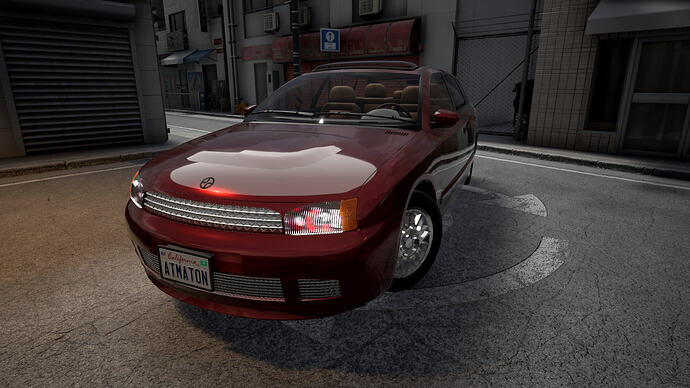
@VeryCoolGuy - Armbauen Vector SR8 BiTurbo
Resuming the search, I opened a listing for an Armbauen Vector SR8 BiTurbo, and initially I wasn’t particularly bowled over by it - I found it to look very basic and plain, and smaller details like the wheel offset seemed like oversights that nobody bothered to correct. Reading through some period reviews and spec sheets, I was surprised to learn that the Vector had 640 horsepower - a frankly insane amount for a turn-of-the-millennia sports estate. Reading on through some of the reviews however, I quickly learned why that was an issue - the Vector’s very narrow tires and very underpowered brakes were easily overwhelmed by its power, and it didn’t really make up for those things by being fun to drive, or even really that quick. Ultimately, I did not find that the Vector left me with good impressions, and so I closed the tab and moved to the next car.
End Result - Eliminated. The Armbauen is a frustrating series of missteps wrapped into a car - from the engineering, with a 640hp flatplane crank twin-turbo V8 which in 2000 is pure fantasy, 640 horsepower but solid rear disc brakes that would easily be overwhelmed (and they already are, as they aren’t anywhere near big enough and have huge amounts of fade), 640 horsepower and very narrow 215-section tires that would never effectively put down that much power - beyond the engine, things like active cooling flaps and the lack of variable power steering are weird and out of place in a car that’s trying to be a fast and premium estate. Statistically it doesn’t impress at all, with well-below average performances in drivability, prestige, comfort, reliability, and sportiness. I touched on it in the in-context review, but the design also left a lot to be desired, feeling way too simple and thrown together, and details like the wheel offset were overlooked completely. All together, it just isn’t a strong entry.
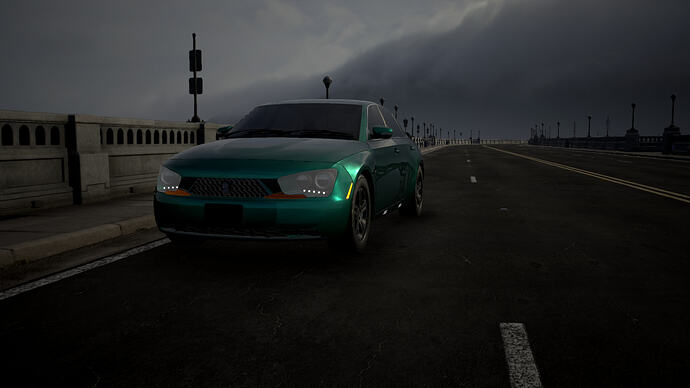
@HyperMud - TwinCrowns - VIP V8
The next car I looked at was the TwinCrowns VIP V8, and immediately I was very dismayed by the design, which I find to be busy and tossed together with no forethought seemingly at all, and I struggle to find anything positive to say about it. Reading through some reviews and owner reports, I quickly learned that the TwinCrowns suffers from being pretty cheaply made, and the driving experience leaves a lot to be desired, it isn’t particularly comfortable, and real-world reliability has been less than stellar. Between those faults and the generally strange exterior design, I quickly decided to move on.
End Result - Eliminated. The TwinCrowns makes a lot of errors - design is the first, most immediately obvious one, with a mix of shapes and elements that don’t work well together at all, and just random elements put onto the design with what feels like no forethought (why are there light fixtures on the door sills???), overall it was one of the weakest cars submitted purely based on design. Engineering and realism had quite a few issues as well - you’re kind of out of the window where a 60 degree V8 would be justifable, the adaptive air suspension and active dampers feel wasted on a car that didn’t seem to use much, if any quality, and as a result it statistically comes apart at the seams, with below average performances in drivability, comfort, and reliability, and average stats elsewhere. With a better design, and more investment into improving the stats, it might have had a shot - but as it stands now, it can’t move on.
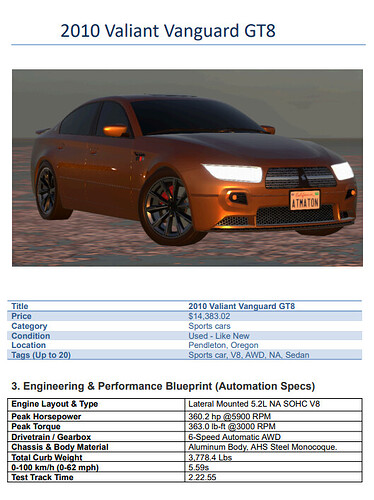
@TheEliteIdiot - Valiant Vanguard GT8
The next car I chose to look at was the Valiant Vanguard GT8, and initial impressions were weak - the design felt thrown together, with too many clashing elements that I feel failed to make an interesting, or even particularly creative design - instead it just felt messy. Reading through the specs and some reviews, I was surprised to learn that it had a transverse V8 - which in and of itself wasn’t a huge problem, but I think it clashes with the American V8 sedan thing that it’s going for. Additionally, for a performance car, I was surprised to see how low the top speed was, not even cracking 130mph, and that it lacked ventilated rear brakes, which seemed like an odd choice. The driving experience was the one thing that stood out as good, with a nice mix of easy regular everyday driving ability, and sporting ability. Outside of that though, it wasn’t particularly nice, it wasn’t super comfortable, fuel economy left something to be desired, and real world reliability has been poor historically speaking. Ultimately, I decided the Valiant wasn’t for me - and I moved onto the next car.
End Result - Eliminated. The Valiant failed to impress Wrekt or myself, with the engineering immediately having some problems - the transverse V8, which felt out of place because the rest of the car didn’t give the impression that you were going for something like the 2000s Impala SS which did have a transverse V8, and smaller things like the lack of ventilated rear brakes on a fairly powerful and sporting car, and the surprisingly low top speed also stood out for the wrong reasons. Statistically it wasn’t a ton better, as while drivability, raw practicality, passenger volume, and sportiness were all okay - prestige, comfort, reliability, and fuel economy all left a lot to be desired. Design was poorly recieved by the two of us as well, with us both agreeing that the Valiant seemed thrown together, with random and disparate elements that had no single unifying element that would have brought it together, and things like the fog lamp/vent combo above the lower grille that already functioned as a side vent felt silly and unnecessary, and ultimately left a poor impression. While it gets close to getting a few things right, it gets just as much wrong, and for that reason, it can’t continue onto the next round.
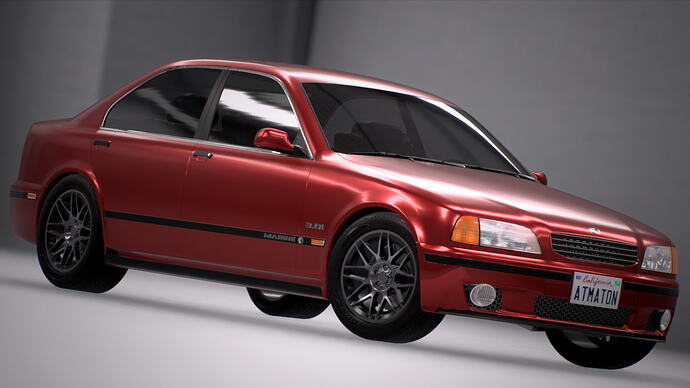
@ThomasA-N - Marine Zenith 3.0i
The next car I looked at was the Marine Zenith 3.0i, and initially I found it to look pretty nice - but poking my head under the hood, I found some surprising things. First, the engine used single point fuel injection, a surprising choice for a 1998 car seeing as basically every car at that point in time had moved to multipoint fuel injection, especially in the premium sports sedan space that the Zenith exists in. Additionally, it had a 6-speed automatic which in and of itself wasn’t an issue, but I question how good it could be considering it had one a full 5 to 7 years before they started to become common place - a suspicion which proved correct, as even despite that fancy transmission and the fancy semi-active sway bars, the Zenith isn’t very pleasant to drive, nor does it feel very sporty or comfortable. Ultimately, I didn’t see the Zenith being the car for me, so I had to move on.
End Result - Eliminated. The Zenith is a paradox on wheels - it wants to be from the mid/late 1990s design wise, and it does that reasonably well, but the engineering tells a very different story - the engine had SPEFI at a time where most cars in the segment the Zenith wants to be a part of had moved to multipoint fuel injection a decade earlier, it has a 6-speed auto and an AHS monocoque which would be fine on a car that’s 10 years newer, but here they’re weird and era-incongruent, the semi-active sway bars are another feature that’s much newer than the car actually is, and treated steel body panels are a strange and unnecessary choice. Statistically it does pretty badly, with well below average drivability, raw practicality and passenger/cargo capacity figures, prestige, comfort, safety, and sportiness. Research would have saved you quite a bit of trouble in this case, but with what we were given, it’s miles away from moving onto the next round.
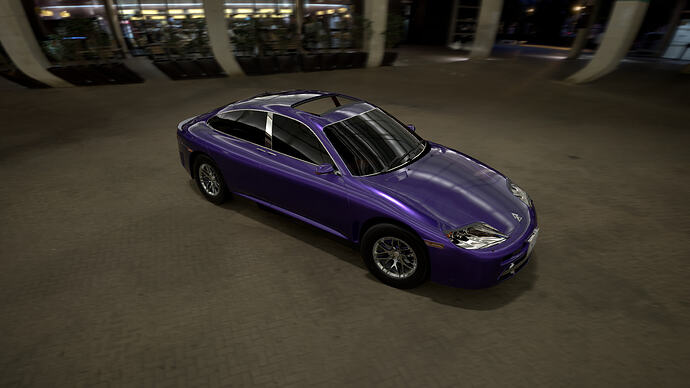
@Lashette65535 - Monaire Ermine
The next car I looked at was the Monaire Ermine, and initially I was.. baffled by it. The design is trying to be too many things - the shape wants it to be sporty, yet the extensive amounts of chrome and suicide doors pull it in a luxury direction, but the high ride height, chunky tires and black cladding on the sides speak more to a softroader type deal - and I didn’t find that it did any of those things successfully, with busy and overdone detailing, superfluous elements like the NACA ducts on the sills, and it all fails to make it a truly compelling design. Reading through some period reviews of the Ermine, I was sort of surprised to see that it was rear-engined, yet it still managed to be relatively practical and sport a sizable amount of cargo capacity despite the engine raising the rear load floor by a lot and removing any under floor storage. The 8-speed automatic was a surprising choice as well, as with the Zenith it recieved one well before it had wider adoption, and I again questioned how good it could be. Here it was somewhat better, as the driving experience wasn’t as bad, but the lack of ESC seemed weird to me, and reviewers seemed to feel the same back in 2004. Moreover, at close to $19,000, it didn’t feel as if the Ermine swayed me, and so I decided to move onto the next car.
End Result - Eliminated. The Ermine can best be described as.. odd. The design leaves a lot to be desired, with a very high ride height and chunky tires that fight with the sporty aesthetic the rest of the design has, the door handles are both too small and put too high up on the bodywork, the fascias on both ends are too busy and overwrought while also lacking depth, and the black side sill with the NACA duct seems superfluous to me. Engineering and realism had some issues too - 2004 is arguably too early for an 8AT (the first car that had one was the Lexus LS460, which didn’t come out until late 2006, and the ZF 8HP didn’t come out until 2009). Additionally, while you didn’t need ESC, just having ABS on what seems to be an otherwise pretty premium car struck both Wrekt and myself as odd, the light AHS monocoque seemed like a needless expense as regular AHS is cheaper and would have given you basically the same stats at a lower cost, making the Ermine rear-engined was a choice as well, and it wasn’t one we thought made the car better - that being said, it had one of the better raw practicality scores and solid passenger/cargo volume figures despite the engine being where it was. The other stats however weren’t as impressive, with well below average drivability, safety, and sportiness. At nearly 19 grand, the Ermine simply doesn’t excel enough against cheaper or similarly priced vehicles to earn a spot in the next round.
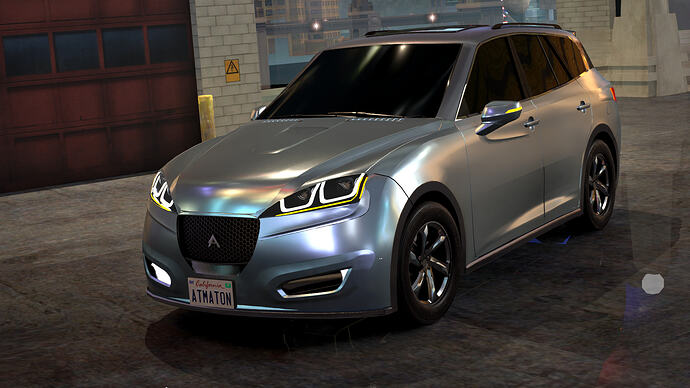
@DuceTheTruth100 - Axxus Summit
The next car I pulled up was the Axxus Summit, and initial impressions were not great - the front fascia alone gives me major pause, with the chunkily detailed headlights pushed way out to the edges of the car and a narrow center grille that makes it look like Renee Zellweger on wheels, random lines sculpted into the side of the doors that don’t help it aesthetically or really serve a purpose, overall I just had trouble finding something nice to say about it. Mechanically it seemed better, with period reviews remarking positively on the cromulent driving experience, and that had plenty of space, was quite comfortable, and real world reliability has been surprisingly decent - which surprises me given the cheaply made variable-geometry turbocharger it uses, and the weird combination of engine materials that physically shouldn’t work. That being said, the 2.0L engine with the fancy turbo makes 180 horsepower which sorta makes me question why they would use a variable-geometry turbo in the first place, and because power is so low - it had some of the worst real world acceleration I had seen thus far, with 0 to 60 taking nearly 9 seconds, and passing acceleration taking almost 7. Ultimately, between the weird design, the odd engine layout which would make me worry about longevity, and the poor acceleration - I decided against the Summit.
End Result - Eliminated. The Summit unfortunately makes quite a few mistakes that pull it from contention, like the design, which Wrekt and I both felt was messy and overly simple at the same time, with an odd front fascia that had large headlights that are forced out to the very edges of the car, a very narrow center grille that lacks detail, and lower fascia elements that don’t feel well connected or well integrated. Engineering purely from a statistical basis actually wasn’t that bad - drivability, raw practicality and passenger/cargo volume, comfort, reliability, and fuel economy were all great, but sportiness and performance were very bad, and 180 horsepower out of a modern 2.0L turbo 4 was far from ideal. Realism in engineering had problems, like the mixed metals on the engine which in and of itself isn’t unrealistic, but you have them reversed - you should never have an aluminum block with a cast iron head, as thermal expansion would ultimately damage the engine long term. The variable-geometry turbo was a poor choice as well, and a needless expense as you didn’t invest any techpool into aspiration, so it sucked up budget and gave no improvement or value to your car otherwise. All together, while there are some good basic ideas and choices behind the Summit, the faults in design and realism hurt the overall package - and thus, it does not continue.
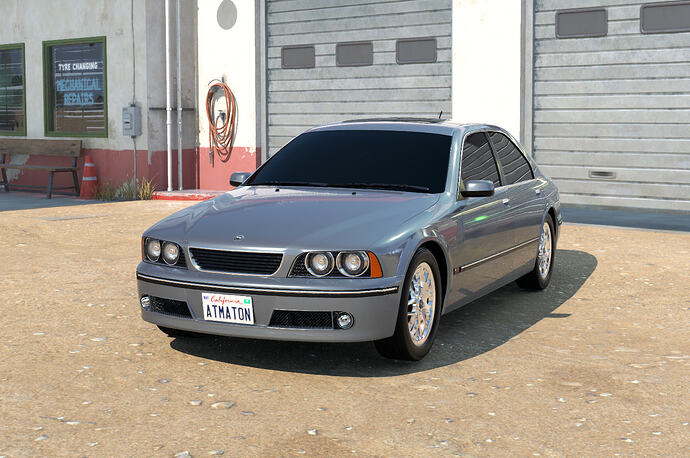
@WumboSized - Voyager X633
The next car I looked at was the Voyager X633, and after quite a few iffier cars design wise, I was pleasantly surprised to see something so.. normal, and something so well designed. However, when I started poking at what lied beneath the design, I found plenty of reason to look elsewhere. Starting with the engine, it seemed on the surface to be pretty reasonable - a medium-sized, naturally-aspirated inline-6 - but it was fully cast iron, an odd choice in a 2002MY car, and it sported both direct injection and 5 valves per cylinder, which felt to me like a packaging and maintenance disaster, and felt inconsistently high tech when combined with the engine’s rather pedestrian and yester-year construction. From there, I was also dismayed to learn that it had plain old hydraulic rack and pinion steering, which I thought was strange to see in a premium mildly sporty sedan - though it’s still an upgrade over the recirculating ball steering in my current car. The Voyager doesn’t get everything wrong - it’s pretty nice to drive, relatively nicely made, pretty comfortable - but it gets just enough wrong that I can’t justify choosing it over something else.
End Result - Eliminated. The X633 is relatively well designed, and there are some generally okay choices behind the engineering, but numerous worse choices that ultimately pull it from contention. Starting with realism - the X633’s engine makes a pretty big faux pas in having both 5 valves per cylinder and direct injection on the same engine, when realistically that would not work, as there would not be enough space for the valves or the injector. Add that to an engine that’s fully cast iron in its construction, which fights the modern design the rest of the engine relies on, and it quickly becomes a confusing mass of ideas. Additionally, a 6-speed auto is too modern of a choice for this era and segment, and the lack of non-variable power steering is a bothersome choice as well. Statistically, it does do some things right - drivability is solid, as was raw practicality, safety, reliability, and sportiness. That being said, the things it got right do not excuse the numerous things that it got wrong, and for that reason - it does not move on.
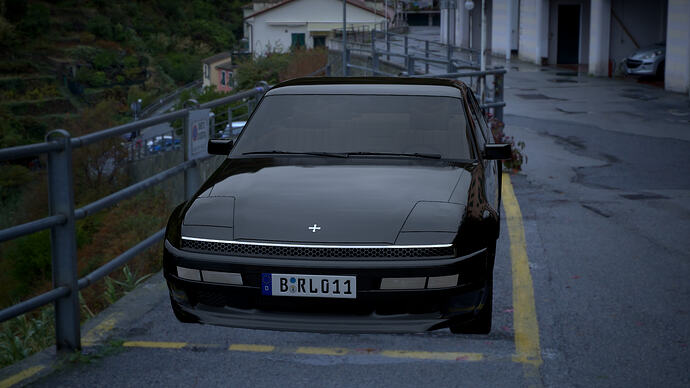
@06DPA - Pilgrim Condor 40th Anniversary
The next car I looked at was the Pilgrim Condor, and initial impressions weren’t bad - the design is nice enough, though I didn’t love the profile or the wheels, which definitely seemed a little too large. Reading through some period reviews however, I found some things that gave me pause, like the 411 horsepower supercharged inline-6 that was mated to an 6-speed automatic and rode on fancy ass adaptive air suspension, and my first thought was how much of a headache it would be to find parts and keep it running - a thought that was justified by numerous owner reports of poor reliability and limited parts availability as time has gone on. Furthermore, even with the fancy chassis tech and luxury bones, it wasn’t particularly comfortable, nor was it as nice as it should be, and there were other issues too, like a small and space-inefficient trunk, a tight cabin, poor real world safety, and poor fuel economy. Ultimately, as much I like certain aspects of the Condor, I find more things that I don’t like - and for that reason, it doesn’t stay on my list.
End Result - Eliminated. The Condor comes close to being good, but both Wrekt and myself found it to make some pretty significant errors. Design, however, wasn’t really one of them. It isn’t perfect - the wheels are too big, the side profile is a little weird, the front fascia has good ideas but the lack of detail hurts it, and smaller elements like the badging feel disproportionately large, but at its core, it’s clean and generally shows good thought and a solid idea behind it. Engineering and realism were bigger issues though - 411 horsepower is quite a bit for 1999, the 6AT is about 5 years too early, the semi-active suspension bits are out of place, and statistically it suffers from poor raw practicality, low fuel economy, low safety, and middling comfort and reliability. With some scaling back in scope and a little reworking of the design, I think the Condor could be a pretty solid package - but as it stands now, it just isn’t where it needs to be to move into the next round.
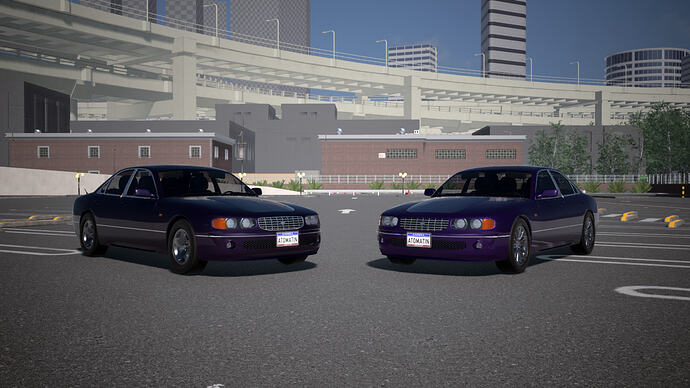
@abg7 - HPG HLG V8 4.0 Deluxe
The last car I looked at for the evening was the HPG HLG V8, and initially my first impression is that it’s.. a car, nothing more, nothing less. It fails to excite in any way outside of the purple exterior paint, but at least it isn’t actively ugly. As an actual car, it’s much the same story - it drives fine, it’s nice enough, it’s comfortable enough, and it’s reliable enough - but at just over 10 large, I can’t help but find other cars in the same price bracket that are more interesting, not just from a design standpoint, but from a usability standpoint. The more I look at it, the more it bores me to tears, and for that, I can’t see it being my next car.
End Result - Eliminated. The HPG ultimately suffers from just being so painfully average. It doesn’t really look bad, it has nice proportions and sensible design cues - but compared to the top entries, it’s considerably less interesting to look at, and fails to have something that really makes it stand out besides the purple paint. Realism was a non-issue for the most part, but Wrekt and I might argue that AHS steel is a little modern of a choice on a 1995MY car, and we would have liked to see an LSD instead of the open diff. Statistically, it doesn’t really perform too horribly anywhere, though fuel economy is on the lower end of things, and price wise, 10 large isn’t too crazy, but it definitely gets beaten by cheaper or similarly priced cars. Ultimately, while neither Wrekt nor I could really fault it very much, we also can’t justify moving it into the next round against stronger overall entries.
Advancing to Phase 2
@yangx2
@electroshockcz
@Xepy
@Capri78
@DrDoomD1scord
@titleguy1 and @DoctorNarfy
@Tsundere-kun
@superbiirdd
@Nebulon, @Vanilla, @Koviico, and @Cyder0719
@Falling_Comet
@EnCR
@66mazda
@missionsystem
@moroza
Fair enough - a galvanized chassis would’ve been more period-correct for the era; I would’ve been closer to the next stage had I also put more effort into the exterior on top of that.
But at least I didn’t break a single rule - those that did wouldn’t have made the finals anyway.
In any case, picking a winner just got a lot tougher.
GG. Really, most of what I put in the car was because I felt the price was too low and didn’t want to resort to quality spam. The engine was a bit overkill too but I really wanted that supercharger on it, even though it kind of forced me to pick the 6 speed auto which even I felt was a bit unrealistic. Good luck to the rest of us!
That’s the MantaR in a nutshell. It’s as close to a meme build as it gets in the context of this field.
Other missteps just made me laugh:
That on its own is bad enough, since it needlessly imposes an emissions and weight penalty in an era where all-alloy (or alloy head/iron block) construction has become commonplace:
Also:
I’d expect direct injection to explicitly require a maximum of 4 valves/cylinder in the Terso update to reflect that.
Having both types of anachronism (by combining items that are too outdated for the era with those that are too advanced) in the same car makes no sense, does it? Besides, unless you really need treated steel bodywork, it just makes the car overweight. Partial aluminum panels are generally a better compromise for newer mass-market cars.
VVL, unlike VVT, splits the cam profile into lower and upper sections that can be adjusted independently (with the former needing to be milder than the latter).
VVT, on the other hand, independently adjusts valve movements relative to bottom end motion.
That reminds me of the Chevy Vega and its platform-mates - their alloy-block/iron-head was a key factor in its downfall. Even an alloy head on an iron block would’ve been preferable in those model lines.
In any case, I’ll be waiting with bated breath to see who finally comes out on top.
Someone’s gotta make the nonsensical bullshit backrunners so the frontrunners can shine brighter 
Good competition though haha, I know I should’ve done WAYYYYYY more research than I actually did (for example… nothing) but it was still good fun! Good luck to everyone else!!
Oh don’t worry, it’s a classic Marine gearbox so it’ll probably shred itself in a minute ^^
For my VIP entry.
The lights on the seals are meant to be ambient lighting for getting into / out of the car.
I guess my AUHD shined here because I worked meticulously to get the fitment of the lights and front end, the body moldings on the bumpers were designed to try to set the car apart (and change what I thought was to flat of an area.)
(to be clear I’m not protesting or even arguing about you judgement just clearing my design process)
Thanks for hosting, I will work to better my skills for the next entry.
Me swapping an aluminum block with fucking cast iron heads is pure irresponsibility on my part!!! I dont know how that happened.
So many things to double, triple and quadruple check…
And I still cant tune a turbo..
I keep telling myself, NO MORE TURBOS…but here we are.
The extra body lines and front fascia…hey, the original was ugly as shit and plain…this was the REFRESH!! Still ugly as shit lol. All good. FUUUUUUUCCKKKK!!!
As far as the things that were cromulent, Im starting to get a grasp on that shit after 6 years…Im slow. Now i need to learn how to balance it all out. Might take me another 6 smh.
I appreciate your review as always, hopefully on my next submission to a challenge of one of yours (and anybody elses) there are no grave mistakes.
Much respect to the finalist.
My favorite is the red Dakota Chevy truck lookin entry, that bitch is FIRE…#GOALS
Dueces!!
CSR 172 - Phase 2
Wagons
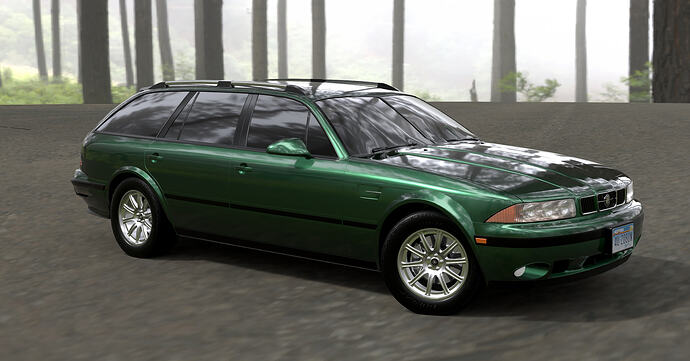
@moroza - Nordwagen Freya GT6.4
Of the two wagons that I’m considering, I’ll start with the Nordwagen - As an actual car, it does get plenty right, the driving experience is pretty solid, it has exceptional real world practicality even for a modest amount of passenger and cargo space, it’s nicely made, and at just over $8,000 it’s one of the cheapest cars here across every category. That being said, I’m not totally in love with the design, which isn’t explicitly bad, but things like the split windscreen and central exhaust don’t work for me and feel unnecessary, real-world reliability has been less than stellar compared to the Viskan, and some of the cars in the other categories. Additionally, it’s one of the more expensive cars to service at close to $1,500 per year, and I worry about long term parts availability, especially as it pertains to the fancy suspension setup and the engine. Ultimately, I think it does a lot right, but it gets plenty wrong too - whether or not that’s enough to fully discount it though, is a bigger question.
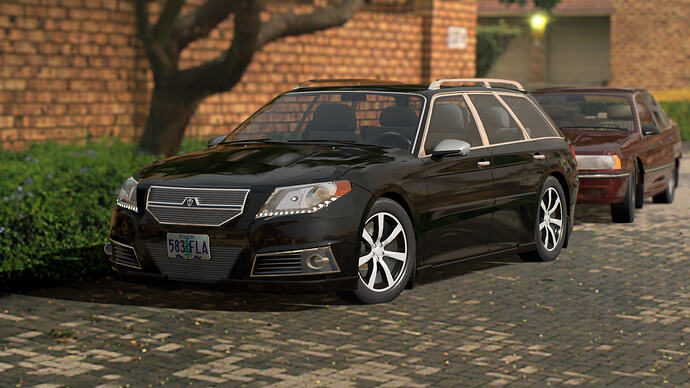
@Capri78 - Viskan 9350 SE AWD-T
Comparing the Viskan to the Nordwagen, and there are plenty of clear and decisive wins -
-
Aesthetically I prefer the Viskan quite a bit, even with its minor faults - namely the very bad wheel offset, the extensive chrome window trimming, and some slightly disproportionate design elements like the rear lights and lower front fascia
-
The Viskan is much nicer to drive
-
The Viskan is much safer
-
The Viskan is much more reliable
-
The Viskan has more physical space for passengers and cargo
-
The Viskan is much more comfortable
-
The Viskan is more fuel efficient
All of that being said, the Viskan makes plenty of errors. I touched on the faults in design already, but in terms of actual real-world usability, the Viskan’s cargo area is laid out worse than the Nordwagen despite having more physical room which makes it less practical in the end, the Viskan isn’t dramatically faster or more performant despite being nearly 15 years newer, and it’s also nearly $20,000 more than the Nordwagen. Engineering wise, there are some questionable choices as well - the powertrain at a surface level almost makes sense - a 2.7L turbocharged V6, AWD, and an 8-speed auto - but then you see that the engine has SOHC 2v heads, it rides on 215mm tires, and the lack of ventilated rear disc brakes was surprising for what seems to be a performance car - all of which comes across as strange and weird oversights. I want to like it, and full disclosure - there are aspects that I do - but it comes apart at the seams once you start looking too deep into the specs and functionality behind the best parts of the Viskan.
End Result - Nordwagen wins, eliminating the Viskan. Comparing the two side by side with no additional context beyond design and stats, I would have happily handed the win to the Viskan. The Viskan takes clear and immediate wins in almost every area Wrekt and I were judging, but it makes a few fatal realism errors and a few too many design mistakes that were too hard to ignore, even for the considerably better stats - but those stats come at a cost - just over $28,000, a hard figure to swallow - but one that does help to contextualize some of the stat improvements. Stats however don’t tell the whole story, and the aforementioned realism concerns - the 2-valve engine, the lack of vented rear brakes, the very narrow tires for the weight/power, and the addition of semi-active sway bars - ultimately make the Viskan a less appealing choice. The Nordwagen wins not because of stats, but rather execution - it makes almost no realism errors outside of it using active suspension parts, which might be a little new for a 1998MY. Generally, the stats are still strong, but compared just to the Viskan, it gets handily beaten almost everywhere but raw practicality, and acceleration/performance - which itself basically ties with the Viskan. Aesthetically, while I may prefer the Viskan’s design, the Nordwagen gets the details right and ends up looking more “finished” than the Viskan. Perhaps most importantly however - the Nordwagen still manages to be as impressive as it is at just over $8,000, almost a full $20,000 cheaper than the Viskan, and because of that, deciding a winner became much easier.
@moroza wins the Wagons category and advances to the finals, eliminating @Capri78.
SUVs and Crossovers
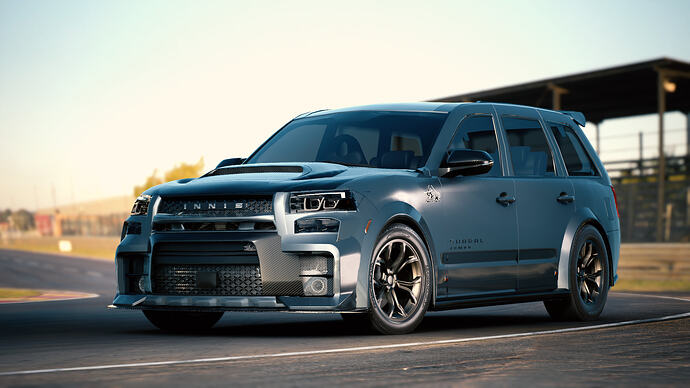
@yangx2 - Innis Sharal Jumbo Bullrun AWOL
The first of the two SUVs I’m considering, the Innis Sharal Jumbo et al - Initial impressions are good, though I do find it to be almost too exaggerated in a design sense, with the large and sharp front intakes, beefy hood scoop, and large flared fenders that all let you know this is more than some mere grocery-getter mommobile. A fact that’s further evidenced when you poke around under the hood - a 4.7L turbocharged V8 making a stratospheric 701 horsepower and 871lb-ft of torque - capable of bringing this 2 and a half ton SUV to 60 in just 3.7 seconds. The rest of the engineering largely seems typical - AWD, an 8-speed automatic, adaptive suspension - but one thing did catch my eye and that was the open differential, which struck me as an odd choice given the power output and sheer performance of the Sharal. That being said, driving reviews haven’t pointed to it being a particularly big issue in the long run, as the driving experience on and off the track is surprisingly impressive for its size and weight. Another thing that also caught my eye was the relatively low top speed - 149mph - a fairly low figure compared to its European and fellow American rivals, some of which exceed 160mph. That being said, I’m not the type to pull top speed runs on public roads, so I wouldn’t consider it a major issue. Other aspects of the Sharal are fairly solid as well - real world reliability has been pretty solid, it has a very comfortable ride and good build quality, it’s surprisingly fuel efficient, though annual service costs are on the higher end of things. Additionally, the Sharal is far and away one of the most expensive cars under my consideration - at just over $34,000, it comes right against my limit - but it does offer a lot for that price.
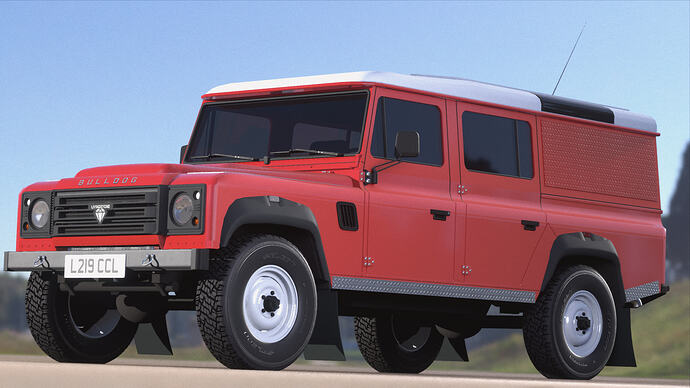
@DrDoomD1scord - Livingstone Type-G “Bulldog”
The second SUV under consideration was the Livingstone Type-G, and it goes in a very different direction than the Innis - design wise, it’s far more utilitarian and practical, not casting any aspersions about what it’s trying to be, which is something that can take you anywhere on any road, and survive it as if nothing happened. Mechanically, the Livingstone is far more humble - powered only by a modest naturally aspirated inline-6, rests on solid axles front and rear, and relies on a part-time 4WD system with manually locking hubs. As a result, it isn’t anywhere as nice to drive, it isn’t as fancy or as comfortable, and it certainly isn’t sporty or fast, but its honesty in engineering makes a refreshing change from the ADHD overstimulation maximalism that more modern cars rely on - and it’s that distinction that I think makes the Livingstone so special. In terms of actual usability and livability, while the Livingstone isn’t a driver’s car or a super luxurious place to spend time, it makes up for that by being pretty much bombproof, cheap to service, and cheap to buy - almost $26,000 cheaper than the Innis. In some ways the Bulldog is a downgrade from my Blazer, but it easily outclasses it and many other rivals on pure vibes alone.
End Result - The Innis and the Livingstone both advance. Much like the wagons in the previous section, the newer and fancier Innis suckerpunches the Livingstone on stats alone, but stats aren’t everything. The Innis moves on for being so maximalist in everything that it does that I can’t help but love it (even as someone who really doesn’t care for your inspiration vehicle), and for all of the maximalism you still managed to make a nicely engineered, nicely put together package that was hard to fault, but not impossible - namely the open diff, which both Wrekt and myself found to be an odd cost-cutting measure that does have some minor impacts on drivability and performance. That being said, I did check what the difference would be if you had an LSD, and statistically it wasn’t as huge as you might think - so I can’t necessarily fault you for omitting one. I also found the low top speed to be a little strange, the actual Trackhawk was limited to 180mph, and most of the other performance SUVs (Cayenne Turbo, X5M, GLE63) range between 155-190mph, but I think that’s a fairly minor issue overall. The Livingstone on the other hand moves on for being so refreshingly honest in what it is, mechanically it’s so standard and realistic that Wrekt nor I really can’t fault you for anything - but head to head with the Innis (and even in the broader field of semi-finalists) the Livingstone is realistically engineered to the point of its own detriment, with the only standout stats being reliability, price, and service costs. However, as I said before, stats aren’t everything - sometimes vibes are a part of it too, and Wrekt and I both enjoyed how “real” the Livingstone is, so it gets to ride into the finals as well.
@yangx2 and @DrDoomD1scord collectively win the SUV and Crossovers category, and both advance to the finals.
Sedans (and 2 liftbacks)

@EnCR - Saidenki SC350
The Saidenki SC350 is the first of many sedans I was considering, and on the surface I see a lot to like - a handsome and sharp design that still feels modern even 20 years later, a solidly powerful V6, and a well tuned chassis that’s equally sporty and comfortable. That being said, it is not totally free of sin - while the car is big enough for me and the smaller wheelbase does lend itself to the driving experience, it does pose certain compromises in practicality and interior space, which are on the smaller end of things compared to the other cars its facing off against. Additionally, the solid rear brakes struck me as an odd cost cutting measure that might not have major effects on the driving experience, but it still seems out of place in what’s trying to be a compact sports sedan. Reliability is also an issue for me - real world reviews point to it not being bad, though it is still reasonably far behind some of the top cars I’m considering. Overall, the Saidenki gets a lot of the basic sports sedan formula down - it does have some problems that give me pause.

@Falling_Comet - Suisei Crest SAL11
The second sedan I have under consideration was the Suisei Crest, and initial impressions are by and large good - the Crest looks very sharp and well constructed, but if I had any major issues with it they would be the beltline, which is quite tall, and the fender flares, which are a little too bulbous. That being said, I can’t help but wonder if I’ve seen something like it somewhere before, which isn’t necessarily a problem, but is something worth noting. Mechanically it looks pretty solid too - the driving experience is widely regarded to be excellent on and off the track, it’s very comfortable and nicely made, real world reliability is strong, and it’s very safe to boot. It does have some minor problems - it isn’t the most practical, and at ~$26,650, it is one of the more expensive cars. That being said, it does pose an interesting and very viable option.
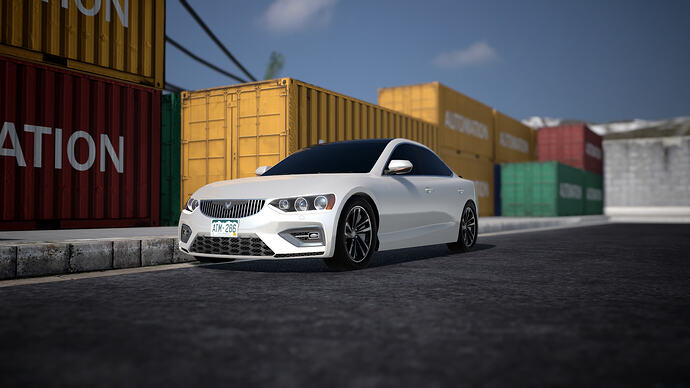
@electroshockcz - Moravia Liska L-Line
Up third was the Moravia Liska L-Line, and initially I’m not sold on it - I find the design to be too simple, and proportionally it’s a little strange looking, something that isn’t helped by the overly small doorhandles or slightly too small wheels - both of which skew how big it is to the eye. Mechanically, it dominates nearly every other car that I’ve looked at and will look at across drivability, practicality, reliability and fuel economy, but it makes one very weird choice - specifically that it’s based on a light truck monocoque, which seems strange for a modern premium compact sedan, and I question what would lead Moravia to do that in the first place. There were some other minor things that stood out to me - particularly the choice to use individual throttle bodies, and the needlessly fancy active suspension that feels out of place on this specific car. All of that being said, the Moravia is a very impressive piece of kit - but I don’t know if I can overlook the issues with the design, or some of its engineering quirks.

@Xepy - Kaufmann Ataraxia 500 KS
Next was the Kaufmann Ataraxia, and at first glance it seems to be a bog standard 1990s German luxoboat - but one peek under the hood tells me that it’s anything but, being powered by a 5.0L naturally aspirated V8 producing a thumping 351 horsepower. Mated to a 6-speed manual and routing power exclusively to the rear wheels, the Ataraxia can reach 60 in 4.6 seconds and a top speed in excess of 170mph - but you’d have no idea of what it’s capable of just based on a first glance. Despite all of that power, Kaufmann didn’t forget about comfort or luxury, and it does those things very well from what I can see. There are a few minor issues that I found in my research - while it is very comfortable, it is still less comfortable than some of the competition, it isn’t the most practical, and while it is reasonably reliable - the very fancy and very modern active suspension system would make me worry about long term longevity, especially once you factor in things like parts availability. All things considered, I very much enjoy the sleeper aesthetic of the Kaufmann, and would be remiss to not give it a second look.
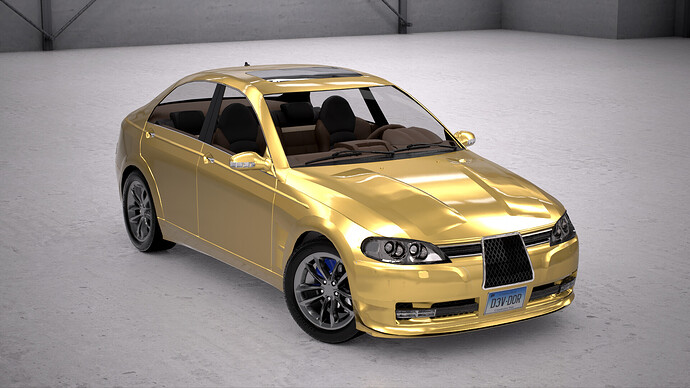
@missionsystem - Potenza Gila S Lusso T4
Next was the Potenza Gila, and initially I was very confused to see this Chick Hicks looking thing on my laptop screen - the very strange upper grille gives the Potenza this peculiar mustache, and I did not find that it fit well within the rest of the design, with the rounded headlights and squarer lower fascia not syncing with it well. The rest of the design wasn’t really much better - the proportions gave the car a smaller, more compact impression than the actual on paper dimensions suggest (which can work in some cases, but here it feels like a mistake) and the rear design felt to me as if it came off a different car entirely, being very rounded and soft compared to the harder-edged and less smoothed front fascia. Mechanically it was fine - the driving experience is very good, it’s surprisingly practical, though it isn’t the most comfortable or the nicest in terms of build/material quality, it lacks in the safety department, and off-the-line acceleration is sluggish. All things considered, I think the Potenza is a fine enough car, but I don’t think I could look at it in the driveway everyday and be completely happy. also why does it keep asking if i know anything about the “third right”.
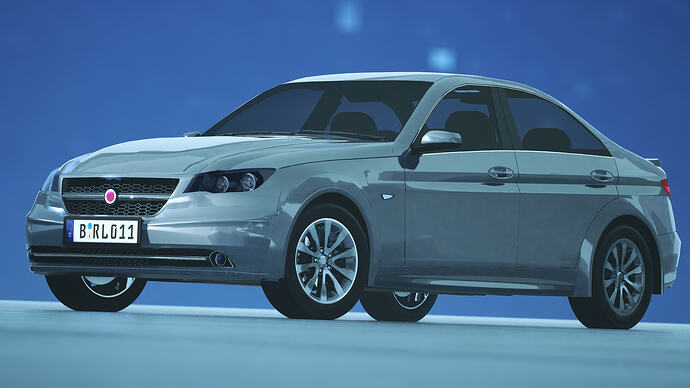
@66mazda - Kaizen FC23
I pulled up the Kaizen FC23 next, and first impressions sort of made me feel like that it was the other side to the Potenza’s coin - it looks far better, though I did find the side crease around the door handles to cut a little too deeply into the bodywork, and it seemed to ride a little high for my tastes. Compared to the Potenza specifically, the Kaizen isn’t as explicitly good to drive, nor is it as nice or as comfortable - but it makes up for those deficits in one major area - price. The Kaizen comes in at roughly $9,950, a little less than 10 grand cheaper than the Potenza, and one of the cheapest cars I’ve considered across any body style. With that strength, and some of the more abstract strengths that it has - considerably better fuel economy, a better tuned chassis for sportier driving, better performance - it makes a strong case for the value proposition angle.
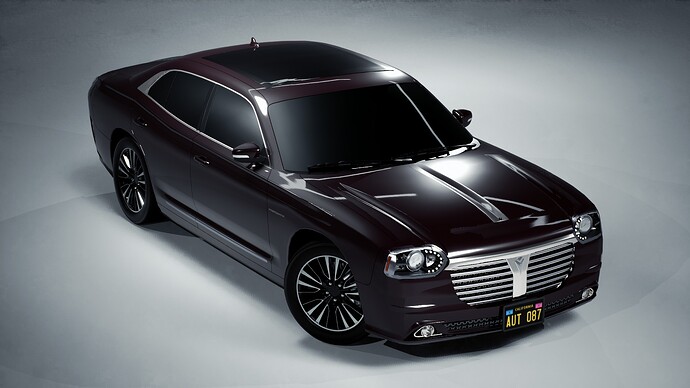
@superbiirdd - Venus Salt Lakes Americana
Next was the Venus Salt Lakes, and my first impression was mixed. The rear design and the profile/overall proportions was all very nice and all solid, but the minute I looked at the front, it lost all of that steam - the front grille especially stuck out as problematic, made from this strange and formless shape that doesn’t fit well with the rest of the design, and the headlights were an awkward shape that wrapped around the sides of the Venus in a strange way that ultimately made the front not very dynamic, nor very eye catching. Design aside, the Venus unfortunately isn’t very nice to drive, real world practicality is very poor with a very small rear cargo area, and fuel economy is actively worse than just about any car that I’ve looked at already - 13mpg - so once you start taking those faults into consideration, it becomes hard to love the Venus.
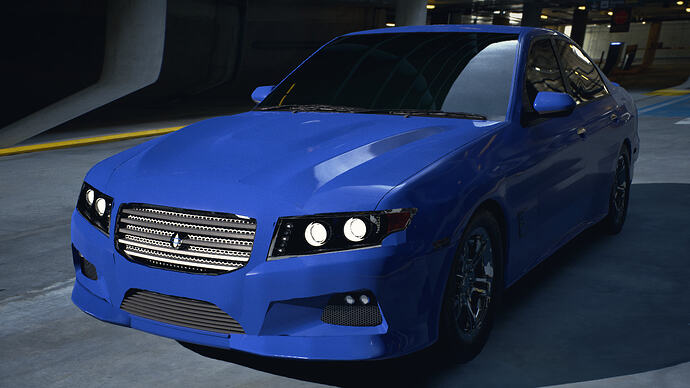
@Tsundere-kun - Eros Delia S48D
The next car I’m considering was the Eros Delia, and generally speaking I liked the design on first glance, but I found there to be just a touch too much bodywork past the rear wheels, and the flat blue of the Delia I found wasn’t my favorite color ever. Aside from that, the Delia gets a lot of what I want out of my next car right - it’s very easy to drive, very nicely made and nicely trimmed, comfortable, safe, and reliable, with just the right amount of sportiness as well. That being said, the Delia isn’t the most efficient car in the world (though it’s considerably better than something like the Venus), and I worry about long term longevity with the active suspension system, particularly with the Delia’s fairly expensive servicing costs. The Delia is a strong package, and it gets enough right that I think I could overlook some of its mistakes.

@titleguy1 and @DoctorNarfy - Rigore Empire 400 Exclusive S4
The second to last sedan I’m considering is the Rigore Empire, and my first impression of it was good - the exterior design is largely handsome, with lots of pleasant detail and subtle sculpting that help to make it more distinct, though I think the rear is slightly too simple, and some of the surfacing on the front fascia feels a little large and clunky, which I think hurts the otherwise classier aspects of the Rigore’s design. However, upon doing some research, I found one big issue with the Rigore - reliability. The Rigore is far and away one of the least reliable cars in its segment, and annual servicing costs are fairly expensive to boot. It does make up for that somewhat by being excellent to drive, comfortable, nicely trimmed, and safe - but I’m not sure I could excuse the Rigore’s truly awful reliability.
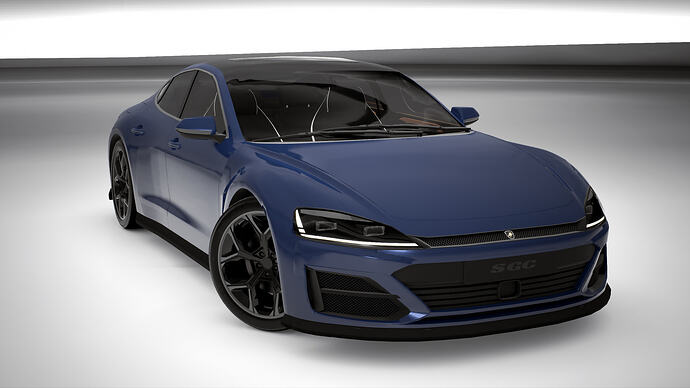
@Nebulon, @Vanilla, @Koviico, and @Cyder0719 - Konatrak SGC
Last up is the Konatrak SGC, and on the surface I generally like the design - it looks modern still and it’s very clean, but the greenhouse shape seems a little simple, and the flat black plastic skirts don’t mesh well with the overall design, feeling kind of dated and lacking in detail. Behind the wheel the Konatrak is excellent, while also being very practical thanks to being a liftback. It’s also very reliable, solidly sporty, and features good acceleration. However, there are some less than ideal aspects - safety is slightly behind some of the other cars I’m considering (and some of those are 10+ years older), the purchase price is slightly high, and annual service costs are on the higher end of the spectrum. There were some other smaller faults that I found - the turbo has been described as somewhat laggy (though it doesn’t seem to negatively impact the driving experience or overall performance), and it features semi-active dampers and active sway bars which wasn’t weird in and of itself, but what was weird was that it didn’t seem to have any form of active or air springs, which seems like a potential oversight to me - whether or not it actually has an effect on the overall experience of the Konatrak, well that remains to be seen.
End Result - the Suisei, Kaufmann, Kaizen, Eros, and Konatrak advance, and the Saidenki, Moravia, Potenza, Venus and Rigore are eliminated. Starting with the eliminated entries, the Saidenki is out simply because it was outmatched against the advancing entries, with low reliability, low real world practicality, low passenger and cargo space, and a design that’s good, but one that Wrekt and I both felt would have been better served on a larger car overall. Ultimately, as Wrekt put it - the Saidenki is “refreshingly normal”, which wasn’t quite enough to move on. The Moravia gets cut for two major reasons; one, the use of a light truck monocoque which confused and baffled Wrekt and I both, and two, the design, which we found to be much too simple, oddly proportioned, and generally behind the top entries in terms of actual execution. Ultimately while the Moravia had impressive stats that would have earned you a spot in the finals, it made one hard to ignore fault that sunk the Moravia’s chances.
The Potenza gets cut here largely due to design - neither Wrekt or I really liked the design, with both of us remarking that the front grille design was reminiscent of Chick Hicks - and not in a good way. Additionally, we felt that the rear came off a different car entirely, and the proportions were very strange and made the Potenza look visually smaller than the dimensions suggest. Engineering was by and large fine, but at just over $19,000 it’s very expensive, and straight line performance was less than optimal. Ultimately, we just couldn’t excuse the Potenza’s design, and that’s why it gets cut.
The Venus is also a design elim, but Wrekt and I found problems with the engineering as well - starting with the design, Wrekt and I both had issues with the front end specifically, as it lacked something dynamic to make it stand out, and the grille shape in particular was this weird, amorphous shape that just didn’t look good from any angle - and the headlights did not help either, wrapping oddly around the sides of the car and clashing too much shape wise. That being said, the rear was rather nice, and the overall profile and proportions were handsome enough. As for the engineering, Wrekt and I found the treated steel panels to be a strange choice, and statistically the Venus gets walloped in nearly every stat, with low drivability, the lowest raw practicality by far and a very small cargo area, middle of the road prestige and low comfort, and very low fuel economy.
Lastly, the Rigore is eliminated for one major reason - reliability. 56.9. That makes it the lowest in the semi-finals (the next lowest is moroza, who is almost 7 points higher), and the fourth lowest reliability in the entire challenge. This became especially troublesome once Wrekt and I considered that you had one of the newest cars in the challenge, and with the Rigore carrying the highest purchase cost in the challenge at ~$34,700, we just couldn’t excuse it. There were some smaller issues too that we questioned, like the omission of an actual limited slip differential, the choice to use solid disc rear brakes, and the somewhat messy and busy front fascia (that being said, we liked the rest of the exterior design, and I appreciate that you reworked a body that I really hate into something this good.) As much as Wrekt and I like the Rigore, it made one really big and really hard to ignore mistake.
On the other side of things, the Suisei advances for just being smooth and effortless in its excellence - the design is very handsome and very well constructed (though I might argue it leans a little too much into replica territory, the beltline reads a little too high visually, and I didn’t love how bulbous the flared wheel arches were), and engineering wise Wrekt and I really had to nitpick in order to fault it - and the only issues we could really find were the relatively low practicality, and the somewhat small cargo area, and putting up strong performances everywhere else made that somewhat forgivable.
The Kaufmann moves on for similar reasons - the design is excellent, and it puts up great performances in drivability, prestige, reliability, sportiness and performance - but the true clincher was the purchase price of $9,000 - making it one of the most affordable cars here, and for that price it offers a lot in return. The Kaizen was also another strong value proposition - at ~$9,950, you get a solidly sporty, safe, reliable, and easy to drive sports sedan, though comfort and prestige are on the lower end of things, and Wrekt and I both were stunned by the frankly incredible 29mpg number you managed to get out of it. Design was strong too, the only thing we could really take you to task over is the slightly too deep crease on the beltline, and that it rode a little too high.
The Eros moves on for being generally excellent - the design is handsome, though I personally did not care for the color, and I found there to be just a tad too much bodywork behind the rear wheels which tended to make it look a little strange from some angles. Engineering was strong as well - with strong performances in drivability, prestige, comfort, safety, reliability, and sportiness/performance. It makes few missteps, namely low raw practicality and low fuel economy, and Wrekt and I both felt that the active suspension is arguably too new for your car - but it gets so much else right that we could overlook some of those faults.
The Konatrak is last but certainly not least - it comes out strong with a very handsome design that is very current and clean, but Wrekt and I both felt that you could have done more to change the shape of the greenhouse and distinguish the Konatrak further from the original body, and the plain plastic side skirts needed something else to make them feel more complete and more interesting. Engineering was strong, with the second highest drivability in the entire challenge, excellent raw practicality and passenger/cargo space, solid reliability, good fuel economy and solid sportiness/performance. On the flip side, the Konatrak has slightly low safety and prestige, low comfort, and a somewhat high purchase price and service costs. Additionally, I questioned using a semi-space frame, the semi-active dampers and active swaybars were fine choices but Wrekt and I both questioned not using some form of air or active springs with them, and the turbo tune seemed a little bit laggy - however, a strong package is a strong package, and the Konatrak earns its spot in the finals.
@Falling_Comet, @Xepy, @66mazda, @Tsundere-kun, and @Nebulon, @Vanilla, @Koviico, and @Cyder0719 collectively win the Sedans category and advance to the finals, eliminating @EnCR, @electroshockcz, @missionsystem, @superbiirdd, and @titleguy1 and @DoctorNarfy.
Advancing to Phase 3
Finalists
@moroza
@yangx2
@DrDoomD1scord
@Falling_Comet
@Xepy
@66mazda
@Tsundere-kun
@Nebulon, @Vanilla, @Koviico, and @Cyder0719
Regarding open diffs
“the open differential, which struck me as an odd choice given the power output and sheer performance of the Sharal”
I can’t speak for the maker, or their knowledge and intent, but I can point out that open diffs have increasingly become commonplace on all but the highest-performance cars. ESC, given its capability to work brakes individually, amounts to de facto (or fake, depending on your perspective) limited-slip, and for the majority of drivers in the majority of use cases is just as good as a true limited-slip diff carrier in putting power down when one wheel doesn’t have much grip. Unlike a true LSD, there’s no need for special gears, fluid, clutches, or as much a risk of the thing breaking traction in deceleration.
Now, of course there’s a case for 700+hp being “highest performance”, but as I look into this not-too-familiar-to-me genre of Super SUV, I find that most of them are using electronically-controlled locking diffs. These are relevant for offroad use (and the handful I’ve seen firsthand won’t normally allow you to keep them on for tarmac performance), while wheelspin on pavement is controlled by brakes as with the vast majority of regular cars nowadays. Range Rover is a typical example, naming their contraption “Open Differential with Torque Vectoring by Braking.”
I am curious about a couple of things:
- Is the Viskan more fun to drive, or easier? I’d be somewhat surprised if it’s both.
- Is it more comfortable before considering its transmission?
Tangential blathering and context regarding the Kaufmann
Japanese grill notwithstanding, I have a soft spot for this car, as it’s patterned very closely after those that got me into cars at all. Its subtlety is squarely par for the course and neither the displacement nor its effect are the least bit surprising. German car culture of the time was more restrained; badge deletes were common factory options, and in 1995, the exterior visual differences between a 110some-hp 518i and a 290hp 540i… were that badge, and about 3mm bigger exhaust tips (easily changed).

1995 518i with wrong springs

1995 540i
Not that it was called into question, but the output is also more than plausible. In 1995, BMW’s M60 V8 architecture could support up to 4.9 - which didn’t see the market for another 3-4 years - at which point it was making well over 350 (albeit with ITB and a few more tricks; see E39 M5 with its S62). A healthy 1995 M60B40 dynos about 260whp, which is ~300 crank with 15% driveline losses. An early M62B44 (non-VVT) more like 270whp from 4.4L; I’ve seen legitimate 285ish from a B44 with B40 cams. Larger 4.6 and 4.8 were available very shortly later, apparently only in Alpinas and some X5, and in both cases were making around 350 with no hardware as special as the S62. Meanwhile, BMW tuner Hartge released something they badged a 5.0, but it wouldn’t be the first case of fake rounding. Anyway, that car had a twin-screw blower on it and was aftermarket to begin with. As for Mercedes, the M119 could range from 4.2 to 6.0; the common 5.0 made something like 330 with excellent luxury credentials.
My former career as a professional wrestler of middle-aged German Maintenance Hogs lives out its days with three of these motors in my garage at this moment: two BMW M62B44 on the floor, and one Mercedes M119 in its home. One of the BMW I personally put some 70-80k miles on over 8 years, while the Mercedes is where I bought it - installed, slow oil leaks and all, in a 2.5-ton barge with a noisy slushbox.
I didn’t used to like V8s until I built that 544 with the first M62. With the stock flywheel, it feels like a stuffy, impeccably mannered but somewhat cold and rigid, straight-laced and boring old bank manager type. With a lightweight flywheel, the tiny rattle at idle with the AC switched on a hot day is nothing compared to the rather extreme improvement in throttle and off-throttle response; downshift, and it dances and sings like something very much alive and visceral. I ran it with the smaller cat-back exhaust from the original 3.0 motor, which was factory-like quiet if not more so, still making 264whp. But then there was the one time someone drove it around with all four open downpipes…
Oh, fun fact regarding the realism of technological progress: around 1997, Mercedes phased out the DOHC-4 M119 and replaced it with… a SOHC-3 M117.
My first reaction to seeing this was “W124 E 500 engine with a post-1994 E34 M5 3.8 gearbox” - which works better than I expected.
In any case, choosing a winner from the top eight entries just got a lot trickier.
yours was sportier and subjectively the more fun car to drive, but the Viskan was easier to drive.
comparing your comfort scores side by side (56.4 for the Viskan, and 40.3 for your car) I think the transmission is definitely a part of it, but with such a sizeable gap between your comfort scores there are other choices that would explain the higher comfort.
The M113 (as pointed out by @Knugcab) was a dual-spark plug design intended for cleaner combustion (with the second plug essentially being where one of the M119’s valves were), but eventually, it had (and reached) its limits (even with a supercharger fitted to boost its output to as high as 655 horsepower in the SLR McLaren 722 Edition), and its replacement unsurprisingly reverted to a DOHC 4-valve/cylinder valvetrain.