Those photos look a lot like the hand-drawn illustrations from that era (especially the first few), very nice work there. Great design for the car as well.
2 Likes

The Archanans have won the race to reach orbit, launching a man-made satellite named "Skaut" nine-hundred kilometers into the sky at a speed of 29,000 kilometers per hour.
The satellite is a small metallic orb consisting of four radio antennas, which beam radio signals back to our world. These radio signals can be picked up by any short wave radio receiver between 20 and 40 MHz, with an orbiting period around 95 minutes.
The Skaut satellite was launched from a modified G-4 Rzhevskaya intercontinental ballistic missile.
Gasmean President Hartmann has confirmed existence of the satellite along with the Archanan launch capabilities. In response, the Hartmann administration has begun drafting a federal space-flight agency responsible for competing with the Archanan space program.
Gasmea versus Archana. Archana in the lead. The Space Race has officially begun!
The satellite is a small metallic orb consisting of four radio antennas, which beam radio signals back to our world. These radio signals can be picked up by any short wave radio receiver between 20 and 40 MHz, with an orbiting period around 95 minutes.
The Skaut satellite was launched from a modified G-4 Rzhevskaya intercontinental ballistic missile.
Gasmean President Hartmann has confirmed existence of the satellite along with the Archanan launch capabilities. In response, the Hartmann administration has begun drafting a federal space-flight agency responsible for competing with the Archanan space program.
Gasmea versus Archana. Archana in the lead. The Space Race has officially begun!
1957 - Suffering from Success
The Futaero concept car was a massive hit. Automotive reporters across Hetvesia and Gasmea raved over Njord's latest creation; calling it "innovative," "forward-thinking," and "a show stopper." The clean, futuristic styling of the car captured the attention of consumers, and Leonard Hansson's state-of-the-art unibody safety-cell held consumer attention. Despite the limited marketing resources, Maria Hansson's Gasmean campaign highlighting the technology to come from the Futaero got Gasmean buyers interested in the next generation Njord automobile.
In the public eye, Njord was about to begin a meteoric rise from a small startup to an established automotive conglomerate - building safe and prestigious cars that could rival the giants in Gasmea. Behind the scenes, in Rasmus Hagerström's office, things were not panning out well.
Rasmus Hagerström was in a troubled predicament. Njord Automobile had done an excellent job with the first phase of Operation North Star, however tough choices had to be made which would alter the second half of the plan.
Leonard Hansson 1-on-1 Meeting
Rasmus Hagerström - CEO - sat in a black leather office chair behind a glossy walnut desk, twirling a small pen in his hands when a knock came at his private office door.

“Come in,” responded Rasmus. He set his pen down and looked towards the opening door, his gaze met with Leonard Hansson - Chief Designer. “And should I say congrats on becoming a father.”
“Why thank you, sir,” responded Leonard, meeting Rasmus with a firm handshake before sitting in the chair across from the executive’s desk. “Maria’s been recovering quite quickly since the delivery. I think she should be back very soon.”
“Not to worry, Mr. Hansson. Mr. Ohlsson has been able to keep the program under control with Mrs. Hansson on maternity leave. Besides, I’m sure your baby boy Mattias is doing well with his mother around.” Rasmus gave Leonard a soft smile.
“Thank you, sir. Maria and I are glad for the support.”
The two sat in the office, the sound of the clock on the wall and the muffled noise of office work outside the room supplementing the pause. After what felt like an eternity, Rasmus broke the silence.
“You’ve done an excellent job with the Futaero, and your wife has done astonishing work up in Gasmea.” Rasmus leaned back into his chair. “I want you to know that, Leonard. And know that what I have to tell you is not your fault.”
Leonard’s face grew confused. “What do you mean, sir?”
“What I mean is we’re going to have to tone down the design for the next generation Njord.”
“I mean, I already knew that, sir,” Leonard looking more relieved. “That was part of the plan after all, right? Tone down the concept car for manufacturability.”
“You are correct, Mr. Hansson,” replied Rasmus, now leaning forward in his chair while brushing the back of his head. “However we’ve bitten off more than we can chew.”
Rasmus handed Leonard a thick red folder, filled with a small hill of paperwork. Looking through the folder Leonard could see quarterly balance sheets as well as various quotes for tooling steel presses and factory construction.
“The public thinks were the hot stuff right now,” said Rasmus. “Your design and Maria’s promotion of the Futaero has been a smash success here and in Gasmea. Sales of the FB-396 have also continued going strong since the '54 refresh; we’re not seeing the gradual drop in sales like we did with the last variants of the car. The problem is we’re also not seeing sales rise either, and now we’re in the position that the FB-396 is generating enough profit for operations, but not for growth.”
Leonard flipped through the file, noting the balance sheets in the last few years. “The new car should fix that, though. The steel panels are much cheaper than our current aluminum panels, that’ll help with margins. Also we could get a loan for upfront costs.”
“Not quite,” replied Rasmus. “For one, our car factory is just too small to fit steel presses and must be expanded considerably to fit them, significantly larger than the planned expansion. I’ve tried contacting external suppliers for pressed steel part production, however none have given any good quotes. They’re focusing efforts with our much bigger competitors.” Rasmus grabbed a sheet of paper from his desk and handed it to Leonard: it was a quote for steel presses. “Secondly, even if we were to spend enough money to get those presses to fit, the tooling alone would cost us $80M. That’s almost three times our company valuation on tooling alone.”
Rasmus got up from his chair and looked out of his office window, watching the outside world before turning back to Leonard. “We have to drop the unibody chassis.”
“But sir,” Leonard responded, disheartened by the revelation. “What about the safety cell? We’ve already spent so much developing it.”
“And if we keep spending money on it, we’re going to go bankrupt,” said Rasmus, giving Leonard a stern look. “I’m not happy about this decision either, Leonard. I wanted to have it on our next car, especially with what it can do for safety. But I also have to run a business here, and the numbers do not balance. We’re simply too small to make that jump right now.”
“So what? We’re just going to build a bigger FB-396? I don’t see how that’s any better.” Leonard was upset. He and his team had sacrificed so much time over the last five years designing this system, just for it to fall away.
“It’s the best option we have right now,” replied Rasmus, looking back out the window. “Besides, we can carry over some of the other Futaero concepts. The semi-independent rear suspension, the new engine, the seat belts. Just those alone are already miles ahead of the competition.”
“I understand,” replied Leonard, dejected. “I don’t agree with the decision, but I understand.” Leonard looked over the steel presses quote once more before setting it and the red folder back onto Rasmus’ desk. “It’s going to be a hard sell for Maria though once she’s back from maternity leave.”
“I guess I should tell you that as well…” Rasmus groaned before letting out a disheveled sigh. “The Futaero had a much stronger than expected impact on demand in our home market, so much that with the largest factory we can afford to build right now Hetvesia would still buy up all of the cars we produce before any could make it into Gasmea. We can’t make enough cars to satisfy both Hetvesian and Gasmean demand. The point is, we’re also putting an indefinite pause on the Gasmean marketing program to save what little funds we have.”
Leonard could feel rage brewing inside of him, and he fought hard to hold back fury towards his boss. “But… what about Maria?”
“Maria will return as a senior marketing professional under Filip Ohlsson, same as before except she’ll keep the same pay and benefits as right now. She’ll also retain her head of Gasmean marketing position once we have the capacity to sell there.”
Leonard sat in his chair, feeling fumes convecting around him. Operation North Star was a lie. His design control was a lie. His wife’s opportunity was a lie. In under ten minutes, an expected pat on the back has resulted in complete disappointment.
“I know that’s not the news you wanted to hear,” interjected Rasmus. “I’m sorry things turned out this way. My plan was ambitious, and I failed to account for this scenario.”
“Hmm,” grunted Leonard, disapprovingly.
Rasmus waited for a moment for Leonard to say something. The tick… tick… tick… of the office clock emanating through the room like a stressed heartbeat. “Do you have any updates for me?” asked Rasmus.
“No,” replied Leonard. “I’m going to need some time to process this and to let Maria know.”
“Of course,” replied Rasmus. “Feel free to take the rest of the day off if necessary.”
Without speaking another word, Leonard got up from his chair and left the CEO’s office, the door creaking to a shut leaving Rasmus alone.
5 Likes

Over the last fourteen days, the worlds greatest athletes battled grueling climbs, breakneck drops, and whipping winds throughout the Southern Alps of Hetvesia. The Vista Hetvesia - sponsored by Five Mountains Clothing - brought cyclists an endurance challenge like never before, demanding maximum output from elite climbers and stage race experts.
The event proved to be intense for spectators. Since the first stage, three riders fought hard for the lead: Jacob Lindskog, Tobi Schopenhauer, and Johan Palme.
The three cyclists were neck and neck through stages one through five, though Jacob Lindskog started to fall behind by stage six when climbs got steep. However, Jacob was incredible on the downhill stages, making up considerable time while his rivals recovered their energy in the peloton.
Jacob Lindskog was looking to be the race favorite until he suddenly dropped out of the race in stage thirteen when a slip over gravel sprained his knee, taking him out of the race. In the last few stages, Tobi Schopenhauer and Johan Palme fought neck and neck, the lead for the climber jersey flip-flopping between the two riders, however with assistance from his teammates on the final stage, Johan edged a slipstream advantage, giving him the edge to take the overall win.
When asked his feelings on his victory, the Hetvesian rider replied, "My team pulled through in the last few stages, conserving energy at the start was the right move here. But I have to say I loved this race. The climbs were intense, but the view from the top of the vista more than makes up for it."
The event was originally intended to be a one-off race, however Five Mountains Clothing has expressed interest in turning it into an annual race.
The event proved to be intense for spectators. Since the first stage, three riders fought hard for the lead: Jacob Lindskog, Tobi Schopenhauer, and Johan Palme.
The three cyclists were neck and neck through stages one through five, though Jacob Lindskog started to fall behind by stage six when climbs got steep. However, Jacob was incredible on the downhill stages, making up considerable time while his rivals recovered their energy in the peloton.
Jacob Lindskog was looking to be the race favorite until he suddenly dropped out of the race in stage thirteen when a slip over gravel sprained his knee, taking him out of the race. In the last few stages, Tobi Schopenhauer and Johan Palme fought neck and neck, the lead for the climber jersey flip-flopping between the two riders, however with assistance from his teammates on the final stage, Johan edged a slipstream advantage, giving him the edge to take the overall win.
When asked his feelings on his victory, the Hetvesian rider replied, "My team pulled through in the last few stages, conserving energy at the start was the right move here. But I have to say I loved this race. The climbs were intense, but the view from the top of the vista more than makes up for it."
The event was originally intended to be a one-off race, however Five Mountains Clothing has expressed interest in turning it into an annual race.
1959 - Out with the Old and in with the New
The change in plans by Rasmus Hagerström had been particularly brutal for Leonard Hansson and his team. Since the axing of the unibody chassis, Hansson's team had just two years to re-engineer a new chassis and body structure for the 1959 production model. Facing high pressure from the crunch period, the design and manufacturing teams worked long, brutal hours to get the production line ready with a new design.
Sixty hour work weeks were common, with the last few months before launch going up to eighty hour averages. Many team members - including Mr. Hansson himself - practically lived in the Njord office. If a team member wasn't sleeping or eating, they were working, and by the end of the design cycle many team members were burned out, some even quitting altogether.
Many sacrifices were made getting the new car ready. Many of the design concepts from the Futaero had to be cut to meet production capabilities, including the radical body design. Leonard had barely any time to be with his wife Maria or his now toddler son Mattias. But now, after two long years of backbreaking labor, the newest car from Njord Automobile is ready to release at the start of 1959 for the '60 model year.
The '60 Njord FB-414
Over the last twelve years, Njord Automobile defined what it meant to have a safe, affordable car with the FB-396. Since its release in 1947, the FB-396 came out swinging, and over the years and numerous refreshes optimizing the design, we have successfully delivered 59,466 cars straight from our home in Reimsboden, Hetvesia.

But now is time for change. You want cars that are bigger, faster, with more advanced technology that the FB-396 can no longer deliver. We hear you, and we are proud to announce the newest Njord coming to showroom floors near you that is bigger, faster, and more advanced than our competitors' cars: the all-new '60 Njord FB-414.
Bigger is Better
The "X-Frame" ladder chassis from the FB-396 has been extensively stretched and modified bringing you a bigger car with better comfort. The live rear axle? Gone, and in its place is a semi-trailing arm rear independent suspension. The body? 4.14 meters long and 1.59 meters wide, allowing room for a full set of doors for the rear passengers. The roof pillars have also been reinforced for better rollover protection.

The Most Powerful Njord Yet
With our new car comes a new in-house developed powertrain: the 4CCT-18B. This engine is a 1,796 cc cast-iron unit with a tri-valve single overhead camshaft and a twin-barrel carburator, putting out 62 kW (84 hp) @ 5,000 RPM and 140 nm (103 lb-ft) @ 3,000 RPM. Mated to a in-house developed floor-mounted 4-speed gearbox, this powerhouse is capable of getting you from 0-100 km/h (62 mph) in under 12 seconds.
The 4CCT-18B is the most powerful engine to come from Njord, and it is also reliable and fuel efficient too. With a combined city/highway fuel economy of 11 L / 100 km (21.4 mpg) and a 53 liter (14 gal) fuel tank, the FB-414 can go as far as 480 kilometers (300 miles) before needing to stop for fuel.


A Homely Interior for the Family
Inside the car has been brought into the new decade. The front holds independent seats with folding armreses, the rear a well cushioned bench. A high-quality Radiomount AM mono-speaker radio will keep your jazz and rock-and-roll tunes everywhere you go, and an adjustable climate control system supplements the front wing windows and roll-down passenger windows to keep the cabin fresh. Option for the LT trim package and you get leather seats with patterned cloth accents as well as air-conditioning.

Passenger Safety Comes Standard
All of the safety advancements from the FB-396 have been brought over to the FB-414: safety glass, a collapsible steering column, a padded dashboard with recessed instruments, as well as collision-optimized front and rear bumpers. Some new advancements have come as well, including better indicator lighting for side-view signaling, as well as lap belts for all passengers. No matter which trim you get, these all come standard: we don't cut corners with the lives of you or your passengers.

The Right Car for Everyone
Whether you're looking for a reliable mode of transportation, a car to haul everyone and the dog, or a compact cruiser with Hetvesian quality, we are sure to have just the right trim for you.
The Base trim FB-414 is for the sensible fellow, with a durable fabric interior and sedan body style for the low price of $10,599.
Looking for a bit more luxury? Fear not, for the LT is the right trim for you. Featuring leather seats with patterned cloth as well as premium white wall tires, the LT can be yours for $12,099.
And for the family man, the LTE brings all of the creature comforts to keep your spouse and children comfortable with plenty of room to spare with the estate body style, available for $12,099.


Vehicle Downloads
Njord FB-414 Base
FB-414_-_Base.car (247.8 KB)
Njord FB-414 LT
FB-414_-_LT.car (247.5 KB)
Njord FB-414 LTE
FB-414_-_LTE.car (247.1 KB)
4 Likes

Modified image from picryl.
The East coast of Vianta has been devastated by the wrath of hurricane Jacqueline; a monster storm that decimated the coastline with intense winds and short preparation time. The city of Porta Minta was the worst hit by the storm, suffering from entire neighborhoods flooded and streets unusable. Thirty-two have been confirmed dead with hundreds more missing.
"I was afraid for my life," wrote a Viantan homeowner. "The water levels rose so quickly when the storm arrived we had barely enough time to get onto the roof. I don't know what we're going to do now. I have nowhere to go."
First responders have been hard at work locating survivors and providing families with food, water, and temporary shelter. The Gasmean Federal Government has been quick to provide funding for disaster aid to the island region.
"What happened in Vianta was one of the worst natural disasters in modern history," spoke President Freeman in a press interview. "May it be known that I share my deepest empathy for the families that were impacted by this storm, and that from this disaster we will rebuild bigger and stronger than before."
"I was afraid for my life," wrote a Viantan homeowner. "The water levels rose so quickly when the storm arrived we had barely enough time to get onto the roof. I don't know what we're going to do now. I have nowhere to go."
First responders have been hard at work locating survivors and providing families with food, water, and temporary shelter. The Gasmean Federal Government has been quick to provide funding for disaster aid to the island region.
"What happened in Vianta was one of the worst natural disasters in modern history," spoke President Freeman in a press interview. "May it be known that I share my deepest empathy for the families that were impacted by this storm, and that from this disaster we will rebuild bigger and stronger than before."
1961 - Changing Tides
There were no breaks for the people of Njord Automobile. As expected, there was massive demand for the FB-414. What was unexpected was the scale of that demand.
During the first year of production the Reimsboden car and engine factories ran full tilt at three shifts. Despite the intense production schedule, preorders for the FB-414 outpaced production capacity. To get a handle on the excessive demand the company froze preorders until the backlog could be addressed. On top of this, the prices for the FB-414 were increased to $13.4k for the Base trim and $15.2k for the LT and LTE trims.
After the first year of production things finally calmed down, the factories averaging around two shifts and demand now under control. Njord had finally reached a comfortable equilibrium, though some changes in structure were looming around the corner.
FB-414 Sales Numbers
It had been two years since the release of the FB-414 and the numbers were in - they had sold a total of 17,519 automobiles. Of the 17,519 cars sold so far, 4,364 were the Base trim, 7,915 the LT, and 5,240 the LTE. The vast majority of sales occurred in Hetvesia, however some small importers in Gasmea and Fruinia managed to sell a few cars despite the lack of an international marketing campaign.

Not only was the FB-414 a sales success, the car has made Njord Automobile a much healthier profit than the FB-396. Since replacing the FB-396 the FB-414 had made the company $42M in profits, with current sales trends suggesting another $30M next year and a total company valuation of $100M.
Rasmus Hagerström's strategy and tactics had payed off. The little Hetvesian startup was now making serious money.
CEO Announcement
Leonard Hansson - Chief Designer - waited patiently at the meeting table with his other high-ranking coworkers: Head of Marketing Filip Ohlsson, Chief of Production Benjamin Lindblad, Head of Finance Ulrich Schwarzenbach, among at least a dozen others. There was some small chit-chat in the room, however Leonard mostly kept to himself - he hadn't had much to talk about outside of his mountain of work. Rasmus was late to this meeting - as has always been the case with these meetings.

The CEO Rasmus Hagerström had called the team together for an important announcement. Rasmus had these sort of meetings before; the last meeting going over the sales success as well as announcing a healthy executive bonus for the team, one even an overworked Leonard was fond of. As the leadership team’s chatter continued, a grey-haired Mr. Hagerström entered the room and took his place at the end of the table.
“Good morning, gentlemen,” spoke Rasmus in a weathered yet still powerful voice. “Thank you for coming in for this announcement meeting today.”
The leadership team quieted, the attention of the room now focused solely on the CEO.
“Next month, Njord Automobile will be eighteen years old.” Rasmus paused, letting his words reflect with the room. “Eighteen years ago, I left my position as Chief Industrial Operations Officer in Njord Maritime Solutions. I left that position to lead the start of a new company with an ambitious goal; to sell private auto transportation all across Hetvesia.”
Leonard leaned back, the leather of his chair creaking softly. Another manager briefly glanced toward the creaking chair before returning his attention back to the speech.
“Back in 1943, before many of you joined this company, we began by developing a family car that would be a pioneer in crash safety.” Rasmus adjusted his shirt collar before continuing. “We went through hell getting that car to market: the war, the production delays, even my admittedly suboptimal public demonstration of the car’s crashworthiness. But in the end we delivered the FB-396, the car that introduced the world to Njord Automobile.”
Leonard remembered the days designing that car, back when things were looser and more organic in the company.
“Since then, this company rapidly grew,” said Rasmus. “We expanded our headquarters where many of you joined the team. Our factories got bigger, and those factories were optimized when we brought engine production in-house. We built an advanced R&D facility that with our design team made our cars the safest on the road.”
Benjamin picked up his white cup, taking a sip of his coffee, then rested his arm on the table.
Rasmus gestured towards the East wall of the room, roughly in the direction the Reimsboden car factories were. “Starting with few resources and an impossible challenge, I have worked tirelessly to bring Njord Automobile into the big leagues. When we started, out there were just farm fields. Now there are factories that have put almost eighty-thousand Njords onto roads across Hetvesia. And those cars are about to bring this company across a $100 million dollar valuation.”
The leadership team around the table gave Rasmus a round of applause before Rasmus continued.
“It has been a long journey getting to this point, and I could not be more proud of what we have been able to achieve. I have also reached a point in my life where I believe it is time for me to slow down and enjoy the spoils of my career.” Rasmus paused for a moment, looking beyond the room as if he were envisioning his next chapter, “It is with this that I’d like to announce my future retirement.”
The managers picked themselves up, surprised by the announcement. Leonard leaned forward in his chair, the leather making another creak on his way back up. Retirement? Leonard thought. Seems a bit sudden, though he is getting up there in age.
Rasmus spoke after his revelation, “My final date will be the first of October. In the meantime, I will be training the next CEO who has been selected by the Board of Directors.” Rasmus looked around the room. “After I retire, you will be reporting to Caesar Bendel. Caesar is a highly experienced leader having been COO of Schauman-Ulf Corporation, a company that makes landing components for commercial aviation.”
When the meeting adjourned, the room spurred into a flurry of movement. Managers crowded around Rasmus offering handshakes and congratulations - except for Leonard. Still in his chair, he looked around the room eying the framed photographs of the company’s history: A grainy black-and-white photo of the pre-production FB-396, another celebrating the 10,000th car rolling off of the assembly line, a page out of Automation Magazine outlining Njord Automobile AB as “Voted Best Startup Company of February.”
Benjamin Lindblad leaned over, clapping a hand on Leonard’s shoulder. “Out with the old and in with the new, eh Hansson? Maybe this Caesar guy will get you that chassis you wanted.”
“Maybe. We’ll have to see,” responded Leonard.
Standing up from his chair, Leonard straightened out his jacket before making his way towards the exit door. Before walking through, he stopped and looked back towards Rasmus where the two caught each other’s eye. The two men had been a part of this company since the beginning, and Leonard didn’t know how he felt about the coming years without Rasmus. Sure, his boss was a hard-ass; but he had to admit he was one hell of a businessman.
Leonard gave the old CEO a nod of farewell, then left the room - the sounds of the buzzing managers fading into rustling paperwork and the tick-tack of typewriters.
The pioneering era of Njord Automobile was over.
5 Likes
“The pioneering era of Njord Automobile was over.”
That’s a bit frightening, now that I’m rooting for the company.
1 Like

Modified image from snl.
Hazardous levels of smog have been a regular occurrence in the valley city of Meranio, Fruinia. The city's geography and the warm Southern winds added with heavy industry and tailpipe emissions makes Meranio especially susceptible to dangerous levels of toxins in the air. Climate scientists predict tens of thousands of citizens have already died from cardiovascular and respiratory complications directly related to the heavy levels of hazardous particulates in the air.
While Meranio is an especially potent example, communities across the globe suffer the same issues with heavy smog in highly populated areas. In an unprecedented move, the Fruinian National Government passed the "Clean Air Decree" on 3 June 1960. The bill established a new set of regulations requiring factories and passenger vehicles to fall under a maximum allowable production of hydrocarbons and carbon monoxides by the year 1962; this year.
"We have made an important step in ensuring the public safety of our citizens," said Prime Minister Tammaro Cicone. "All people have a right to enjoy clean air all across Fruinia, from Canta de Mar to Viestella and every city, town, and village between."
Manufacturers have been less keen on the emissions enforcements starting this year. "Two years is too little time to make these changes," said an anonymous factory owner. "If the people care about keeping their jobs, they'll either get this Parliament to push these unrealistic policies back or get these radicals out of office."
While Meranio is an especially potent example, communities across the globe suffer the same issues with heavy smog in highly populated areas. In an unprecedented move, the Fruinian National Government passed the "Clean Air Decree" on 3 June 1960. The bill established a new set of regulations requiring factories and passenger vehicles to fall under a maximum allowable production of hydrocarbons and carbon monoxides by the year 1962; this year.
"We have made an important step in ensuring the public safety of our citizens," said Prime Minister Tammaro Cicone. "All people have a right to enjoy clean air all across Fruinia, from Canta de Mar to Viestella and every city, town, and village between."
Manufacturers have been less keen on the emissions enforcements starting this year. "Two years is too little time to make these changes," said an anonymous factory owner. "If the people care about keeping their jobs, they'll either get this Parliament to push these unrealistic policies back or get these radicals out of office."
1962 - Sport and Spice
Caesar Bendel became the new CEO of Njord Automobile AB, and after a few months observing the company's operations he quickly got to work growing the company.
First on the agenda was a complete overhaul of the Reimsboden automobile plant. The current factory was limiting FB-414 production output and starting to show its age. With all of the small additions over the years, the building was now a cobbled together Frankenstein of bump outs and non-uniform support beams that made upgrades to the plant more and more costly. Instead of more additions, Caesar demanded for the old factory to be knocked down and a new, larger building to take its place.
Next, Caesar ordered the company's designers and engineers to begin the mid-life facelift for the FB-414. The competition was quickly catching up to Njord and demand for the current FB-414 was slowly trickling down. With a mid-cycle refresh, Caesar expected demand to rebound enough to hit his target production numbers.
Since Hagerström's strategy with the FB-414 payed off with plenty of juicy profits for Njord, Caesar had plenty of cash to commit to the strategy as well as revive the company's attempt at breaking into the Gasmean market. As work began on the new factory and the revised FB-414, Caesar made some phone calls to his professional network to find the right man for Gasmea.
A Fast Njord FB-414
Leonard quickly got to work with his team of designers once he got orders from the new CEO to update the FB-414; and by quickly I mean not quick at all. The veterans in the team were still suffering burnout and the newer younger members were antsy with boredom. Team morale was suffering, even Leonard himself had a hard time coming up with what to do for the facelift until one night his wife Maria gave him some inspiration.
One thing Maria learned on her travels showing off the Futaero concept car abroad was that Gasmeans love to go fast. And right now, market trends suggest that buyers, especially younger buyers, want affordable speed. With some added spice, the FB-414 could be the affordable sports sedan the youth want.
Leonard loved the idea, as well as his team when they learned they would make a fast Njord. One of the FB-414 test vehicles were taken from the Reimsboden R&D facility and completely torn apart, and over the following months the team put their passions into making the sports Njord, internally nicknamed "Trojan" for its deceptive looks. The sports Njord could be mistaken for a generic run-of-the mill Hetvesian sedan if you didn't know what to look for: the lower cooling vents and sporty red line on the radial tires being the only giveaway. Underneath though, this FB-414 was a menace. The engine was extensively modified with plenty of go fast bits: a Folley DCOE carburetor, an aluminum mid-flow performance air filter, a welded tubular exhaust manifold with enlarged piping, an aggressive loped camshaft, an expanded engine bore, a stroker kit, and fuel mapping that prioritized power and throttle response. With these modifications, the 2.0L 4CCT engine could make a peak of 81 kW (108 hp) to the crank at 5,000 RPM


The team also completely upgraded the cars underpinnings to take advantage of this power in the twisties. Putting this power into the ground were radial sports compound 165/70R15 tires and enlarged rims. The brakes were extensively upgraded, replacing the drums with single-piston discs front and rear with ceramic pads. The springs and dampers were stiffened and the rear got a sway bar. Interior modifications were primarily focused on reducing weight by removing the trunk carpeting and some sound deadening material. Headrests were added to the front seats - both to give support during hard acceleration as well as to prevent whiplash in the event of a rear-end accident. When Leonard and his team got their work done with the "normal" projects, they worked on this sporty passion project. Near the tail end of 1962, they had a FB-414 that was capable of 0-100 km/h (62 mph) in 9.9 seconds, a gear limited top speed of 178 km/h (111 mph), and a cornering grip of 0.76g on the 20 m skidpad.


The Gasmean
The world was a haze of humid late summer heat and shifting shadows as a young man rode through the Hetvesian countryside on his bright red twin-cylinder cafe bike. Gliding through the tree-lined asphalt the bike rose and fell through the rev range, every moment a pop-laden pause in exhaust pulses as the rider clanked through his gearbox.

The rider swiftly flew down the road as he passed by farm fields, small rural stone cottages, and the occasional tractor pulling trailers full of various cold crops. The rider had been on the move for quite a while - as evidenced by the road dust caking the bike and bug splats dotting his goggles, yet he continued on his journey.
As the bike rode through a thick cluster of dark green pines and elms, a small town clustered next to a large freshwater lake came into view, framed by the overbearing might of a jagged grey Mt. Ellis. To the right of the road was a small white sign with the name Reimsboden.
The rider continued for a short time before the the mountainous countryside turned to traditional townhomes pushed up close to the tight cobbled roads. Approaching a junction just outside of town, the rider downshifted, pops from the exhaust echoing off the building walls between the sounds of traffic and pedestrians, and leaned into a right. The town’s density began to drop off again as the bike entered a neighborhood dotted with various office buildings and factory complexes.
Appearing around a bend, the rider turned into a small parking lot in front of a white office building. The brakes squealed as the bike came to a stop, the thump-thump-thump of the engine bouncing until the rider shut down the bike, now leaving the sounds of birds chirping and the occasional passing car. The rider got off the bike, then quickly brushed dead bugs off his coat while flattening his jet-black hair before making for the buildings entrance, outlined by a sign reading Njord Automobile AB.
Inside the building was sterile: beige tiles and glass walls cocooned cloth grey waiting chairs, fronted by an oak reception desk that clashed with the drab interior. Behind the desk was a blonde woman clacking away on a typewriter.
“Good afternoon, miss,” said the rider, wiping away road grime from his face with a handkerchief. “Is Mr. Ohlsson in the office today?”
The woman stopped working on her typewriter and gave the rider a disinterested look. “Not today, sir. Mr. Ohlsson is out for today.”
“Hmmph. Well that’s a damn shame.” The woman continued typing away while the rider continued, “Could you let him know that I came by?”
“I guess,” replied the woman, not breaking her concentration on whatever she was working on. “Have a name to go with that?”
“Jensen.”
The woman stopped typing and looked up at the man. “…Jensen Newman?”
“The one and only,” answered the rider.
“Right. Give me a moment.” The woman got up from her desk and went through a door behind. For some minutes, the Jensen waited; occasionally pacing the room or fiddling with a pen on the reception desk.
As Jensen waited, he picked up on a conversation behind the door.
“Newman?” asked a feminine voice. “Jensen Newman? The marketer from General Autos?”
“The very same,” answered another voice. It was the receptionist. “He’s in the lobby right now covered in dirt.”
Jensen didn’t hear anything else behind the wall until the door popped open, revealing a brown haired woman in a white pencil skirt and white heels. The woman approached Jensen, the click-clack of her heels echoing in the empty lobby as she extended a handshake. “Nice to meet you, Mr. Newman. I’m Mrs. Hansson, but you can call me Maria.”
“Nice to meet you, Maria,” replied Jensen. “I take it you’re with Mr. Ohlsson?”
“He told me you’d be in next week, though looks like you came a bit early,” said Maria, looking over the man.
“Figured I should see what I’ll be working with,” replied Jensen, fiddling with the pen on the desk again.
“Right,” said Maria, gesturing Jensen to follow her down the hallway. “Well since Mr. Ohlsson isn’t here today, I’ll give you the rundown.”
The office hallway was lined with photographs of Njord automobiles along with old blueprints of Njord's first car, the FB-396. As they reached near the end of the hallway they stopped at a photograph of a low, sleek car adorned in mahogany paint and chrome.
“You should know this isn’t the first time we’ve tried breaking in,” said Maria, gesturing at the image.
Jensen gazed at the image for some time. “The Futaero,” said Jensen pointing at the image. “I remember seeing this at the Crafton Auto Show. Got us a bit worried at General Autos. What ever happened to it?”
“The old CEO bit off more than he could chew,” answered Maria, her eyes squinting in disappointment. “It was the right car at the wrong time. We couldn’t afford to build it, and my poor husband Leonard’s work was all for naught. While management got cold feet, him and I payed the price.”
Maria stood in front of the concept car image, reminded of what she lost before returning her attention back to Jensen. “But that’s history.”
Maria walked down the hallway, Jensen observing the photograph for a little longer before catching up to her.
Maria continued, “Our current car - the FB-414 - did its job and filled the company coffers. Our new CEO, Caesar Bendel, wants to use that cash to pump up our production numbers; and to do that we need into Gasmea.” They stopped in front of a set of closed doors. “That’s where you come in.”
Pushing on the set of doors, they entered a large office space lined with desks covered in magazines, maps, and advertisement posters. In the corner of the office was a large world map with a few hundred red pins dotting across Hetvesia and a dozen dotted around Gasmea. Also in the corner were a few scale models of the FB-414, each with a slightly different grill and light pattern.
“We build small, safe, fuel efficient cars,” said Maria picking up one of the scale models and handing it to Jensen. “I know and you know that Gasmeans are more used to cars with a bit more sex appeal. Big bodies. Big V8s. The works. The question is, how do we convince them to buy a Njord?”
Jensen eyed over the scale FB-414, a very different car from what he was used to with General Autos. “Unless you’ve got the cash to build yourself a grand tourer or a luxury car, I’ll tell you now that you will never convince a Gasmean that this… econobox is interesting enough to buy.”
So what do you suppose we do?" asked Maria.
“Easy,” answered Jensen, setting the model back down. “We sell them on the truth.”
6 Likes
I wonder what “the truth” might be…

Gasmean President Daniel Freeman was shot by a gunman during his campaign speech in Eastport on July 23. His brother Jeff Freeman announced the President has succumbed from his wounds and was pronounced dead at 15:10. Vice President Sean Cooke has been given power of the President of Gasmea.
"Today is a dark day for democracy," spoke Hetvesia Prime Minister Christof Schlechter. "There are simply no words that can make sense of what happened in Gasmea. I wish for the Freeman family to find justice and peace."
The suspected shooter, identified as Harry Robertson, was found dead five kilometers from the crime scene. Law enforcement is in the process of identifying the cause of death along with any tied suspects.
In an interview hours after the incident, the Eastport Chief of Police announced, "To ensure the safety of our citizens and allow our investigators to work unimpeded, a mandatory curfew will be in effect starting at 20:00 tonight. We ask for the public’s full cooperation during this period of national mourning. Please remain indoors until further notice. While we hope for a peaceful night, officers are authorized to use all necessary measures to neutralize further threats to public order. Stay inside."
Our reporters are closely following this story and will provide updates as they come.
"Today is a dark day for democracy," spoke Hetvesia Prime Minister Christof Schlechter. "There are simply no words that can make sense of what happened in Gasmea. I wish for the Freeman family to find justice and peace."
The suspected shooter, identified as Harry Robertson, was found dead five kilometers from the crime scene. Law enforcement is in the process of identifying the cause of death along with any tied suspects.
In an interview hours after the incident, the Eastport Chief of Police announced, "To ensure the safety of our citizens and allow our investigators to work unimpeded, a mandatory curfew will be in effect starting at 20:00 tonight. We ask for the public’s full cooperation during this period of national mourning. Please remain indoors until further notice. While we hope for a peaceful night, officers are authorized to use all necessary measures to neutralize further threats to public order. Stay inside."
Our reporters are closely following this story and will provide updates as they come.
1963 - Work in Progress
Under CEO Caesar Bendel's direction for Njord Automobile's business strategy, every department of the company was hard at work preparing the FB-414 for a successful mid-life refresh.
The R&D department used their time reverse engineering various automobiles from the Gasmean market in an attempt to identify areas the design team could "Gasmeanize" the FB-414. One particular part that was common in the Gasmean cars studied was the use of an automated shifting transmission, something that the company predicted Gasmeans had come to expect in cars and thus should be incorporated into the FB-414.
The new Gasmean hire Jensen Newman worked closely with Maria Hansson studying market trends as well as creating an unconventional marketing strategy that would make Njord cars appeal to the Gasmean buyer. The marketing team also got contacts with some of the Gasmean importers that were already selling Njords to establish a more established business relationship, turning some of these importers into Njord dealerships with service support.
Big plans were happening on the sides of production and design.
Teardown
After nearly sixteen years of service building the FB-396 and FB-414, the small Reimsboden automobile factory has ceased production to be torn down.
Prior to the shutdown the factory had been hard at work outproducing FB-414s so that the company had enough stock to continue selling Njords while the larger automobile plant was constructed. To ensure the factory would be ready to produce cars as soon as possible a two-phase plan was used. Phase 1 would cover the construction of the main assembly facility - a 20,000 m2 building that would employ nearly 1,000 employees to manufacture the facelifted FB-414. The building was designed to be highly modular with the potential to add another 80,000 m2 in expansions to the main facility as well as room for other facilities.

Phase 2 - which would not occur until Njord Automobile achieved their financial targets from Phase 1 and a new model was created to replace the FB-414 - would add 40,000 m2 to the main building and introduce an on-site steel press facility.
For the teardown of the old factory, Jensen Newman suggested to CEO Caesar Bendel that the factory be demolished with explosives on camera as a way to advertise Njord "growing up" as a brand - an idea Caesar loved. However when word got out that Njord was going to blow up the factory the Reimsboden community pushed back. Many community members, including owners of the neighboring industrial plants, did not want to risk collateral damage from the explosion or disturb the wildlife. With pressure from the community, the city council was forced to withhold explosives permits. Caesar and Jensen had to give up on the marketing opportunity and settled with a standard, controlled demolition: wrecking balls, bulldozers, and excavators.
Near Completion
It was a regular Tuesday in the late winter; about a year before the planned release of the FB-414. Inside of the design facility Leonard Hansson with a few of his teammates stood around the engine compartment of the running "Trojan" FB-414, the lopey sound of the modified 4CCT engine rising and falling as the engineers fiddled with the carburetor. Near the edge of the design room sat three other FB-414s - fully assembled and looking near production ready.

The Trojan on the other hand needed some more work, not that Leonard minded. They had plenty of time since the other trims were near complete and, frankly, he hadn’t had this much fun designing a car in ages.
With one last adjustment, the engineer stepped back and shut the Trojan’s hood. As he wiped his greasy hands with a clean shop towel, the engineer said to Leonard, “I think that should do it, sir. Ready to take 'er for a spin?”
Before Leonard could answer, he noticed the CEO Caesar Bendel standing in the corner of the room, watching. “You go, Marko,” said Leonard to the engineer. “Go a few laps around town and see if that tune fixed the dead spot at 3,500.”
In a few swift movements, the other engineers opened the roll-up door, the Trojan took its thunderous combustion outside, and the roll door came back down with a metallic ka-chunk. Leonard told the other engineers to take lunch early, then walked over to meet the CEO.
Caesar was an older fellow, though his thick combed hairline and strong chin could make you mistake him being ten years younger than he really was. He was clean-shaven with nigh a blemish on his face - his rounded square glasses accenting his grey eyes and chiseled cheekbones. His suit was custom made, charcoal colored with a golden tie, fit snug to his towering figure.
Caesar did not beat around the bush when it came to his presence, nor his conversation. “Mr. Hansson, let’s chat in your office.”
“Sure thing, boss.” Leonard and Caesar left the cool musty air of the garage and entered the warmth of the design team’s office. The room was a mess of various engineering drawings and car parts, some desks were piled with dirty coffee cups and half-eaten lunches. Leonard’s desk was mildly clean, though losing the battle with his slob of a neighbor, one side organized while a pile of parts bled into the other.
On reaching the desk Caesar took Leonard’s chair as Leonard pulled one from the table behind, moving a dusty box from the seat to the table then sitting across from the CEO.
“Apologies for the mess, Mr. Bendel.” Leonard paused for a while trying to come up with something to say. He had barely talked to the new CEO - he’d barely seen him in the shop. After thinking, Leonard settled with a, “How have you been?”
“Can you give me an update on the status of the FB-414?” asked Bendel, resting his hand on his chin while giving Leonard his unbroken attention.
“Oh, right,” said Leonard recovering from the CEO’s blunt command. “We’re pretty much done with the standard trims. We’re waiting on the marketing team to pick the final grille design but beyond that the car is feature complete.”
Caesar was writing in a small leather notebook he had pulled from his jacket pocket. “I see. How about that car you were just working on?”
“The Trojan? That one’s still a work in progress but I expect it to be ready far before the manufacturing team needs it.” Leonard handed a print sheet with the Trojan’s dyno results. “It might look like a normal Njord, but this thing is quick. I’m sure the kids are going to love it once it’s out.”
The CEO looked down at the paper Leonard was handing him, but did not take it. Instead, he clicked his pen, then tucked the notebook back into his suit jacket. “Hansson,” Caesar’s sharp gaze affixed onto Leonard. “When you were directed to facelift the FB-414, did I tell you to build a sports car?”
“Well, no sir,” Leonard responded, taking back the dyno sheet. “But Maria and I-”
“Who’s Maria?” asked the CEO.
“My wife,” responded Leonard. “She’s in marketing. We thought a sporty Njord would be attractive for the Gasmean market.”
“Interesting.” Caesar crossed his arms as he leaned into the office chair. “This is the first time I’m hearing about this.”
Leonard gave the CEO a curious look. He could have sworn he had mentioned the sports Njord at least a few times in the memos he sent to the CEO.
“Mr Hansson,” said Caesar in a polished, corporate voice. “Let’s zoom out for a second; We need to talk about synergistic prioritization. While I appreciate that your team has aligned with your target metrics set for the face-lifting project, this sports car is an inefficient use of company resources.”
“What do you mean,” interjected Leonard, flustered from the CEO’s comment. “The 414 is practically done, and what this sports car has done for the team has-”
“The board is looking for scalable stability.” Caesar was not listening to the designer. “A sports car does not fit the brand image as a safe, sensible form of transportation. It is a liability, and one that will conflict with the company’s goals; burning up resources that are best suited towards expanding production capacity.”
He leaned forward, his cold grey eyes locking into Leonard with a soulless lack of empathy.
“You need to sunset this… Trojan side project, effective immediately. You are going to pivot back to the assigned trims you were given and focus your bandwidth on optimizing the car for cost-effective manufacturability. Those are our core revenue-generating pillars that will fund the new Njord and bring the board the best returns on investment.”
“But what about the team?” pleaded Leonard, the dyno sheet he was holding now fluttering to the cold floor below. “This is the only project they’ve been excited about working on for years.”
“I understand there’s some emotional attachment.” Caesar leaned back into the chair, now rolling his pen between his fingers. “But we need to focus those passions on the company’s goals. And right now maximizing the value-add of your team’s man-hours towards cutting production inefficiencies is the optimal approach towards reaching those goals.”
Leonard didn’t know what to say.
The CEO got up from Leonard’s chair, brushing the seat of his pants and straightening his tie before giving Leonard a small slip of paper with a datetime written down. “Let’s touch base in a week on the FB-414 optimizations. I’m looking for a total buy-in on this pivot, Hansson. No more sports cars.”
“I…,” Leonard was out of ammunition. There was nothing he could do else risk his or Maria’s career. “Yes, sir.”
“Great to hear,” said Caesar, giving a dejected Leonard a firm handshake. “I’ll see you 07:30 Tuesday at my office.”
The CEO began to walk away before stopping to turn to Leonard. “Oh, and one more thing. I’m going to need you to scrap the car. We can’t risk having the media think we’re building race cars.”
With the CEO out of sight Leonard sat in the office, stunned.
What just happened, Leonard thought. What happened to the Njord I started in? First it’s Rasmus gutting the FB-414 from having any resemblance to the Futaero concept. Now I can’t even do something fun for my team.
Leonard could hear the garage door rolling up outside of the office and the loud performance exhaust entering before coming to a stop. The engineers were back from lunch, laughing and chatting about racing the car.
He couldn’t bring himself to tell his team the project was over. Not right now, but he knew he had to before the day ended - it would be better for them to hear it from Leonard. As his team continued their banter outside the office, Leonard sat alone with the buzz from the office lights overhead.
This company changed, thought Leonard. I loved working here. The people. The projects. The freedom of design that I had never been able to get anywhere else. Not anymore.
Leonard looked toward his office chair where the CEO previously sat.
“I hate working here.”
7 Likes
I predict that Leonard will eventually quit, go to a competitor, make some notable cars, then come back with a much higher salary 

Modified image from Wikimedia Commons.
The glittering grand finale, hosted by famous actress and TV host Josefine Jørgensen, has come to a nail-biting finish with Clara Di Donna taking the Camsovision Song Contest crown.
The contest, previously held in Fruinia, took place by the foothills of the Hetvesian alps in Karlstadt am Strand, Hetvesia. Some of the world's top pop-singers came and made show-stopping performances, but in the end it was Di Donna's powerhouse vocals and distinctly Fruinian charisma that stole the hearts of the judges and millions of televoters across the globe.
Fruinia's song choice "Piccola barca" perfectly encapsulated the feelings of the quaint colorful hillside architecture and picturesque lakes with sailboats. It was unmistakably Fruinian.
Clara Di Donna representing Fruinia scored 492 points with "Piccola barca." Josefine Gram representing Hetvesia performed "Vintervind" - a somber piece about the snow-capped windy peaks of the alps - which scored 465 points. Johnny & the Pistons from Gasmea performed "Riptide on the side" - a rockabilly with strong influence of the surfing culture in Porta Minta - which scored 381 points.
The 1965 Camsovision Song Contest will be held by the host country Dalluha in the hot coastal city Al Rilma.
The contest, previously held in Fruinia, took place by the foothills of the Hetvesian alps in Karlstadt am Strand, Hetvesia. Some of the world's top pop-singers came and made show-stopping performances, but in the end it was Di Donna's powerhouse vocals and distinctly Fruinian charisma that stole the hearts of the judges and millions of televoters across the globe.
Fruinia's song choice "Piccola barca" perfectly encapsulated the feelings of the quaint colorful hillside architecture and picturesque lakes with sailboats. It was unmistakably Fruinian.
Clara Di Donna representing Fruinia scored 492 points with "Piccola barca." Josefine Gram representing Hetvesia performed "Vintervind" - a somber piece about the snow-capped windy peaks of the alps - which scored 465 points. Johnny & the Pistons from Gasmea performed "Riptide on the side" - a rockabilly with strong influence of the surfing culture in Porta Minta - which scored 381 points.
The 1965 Camsovision Song Contest will be held by the host country Dalluha in the hot coastal city Al Rilma.
1964 - Knocking at Gasmea's Door
Years of planning and preparation had come to this moment. Njord had tried and failed to break into Gasmea just a decade ago, but this time the company was not playing around. The company was bigger, meaner, and had more green to burn before calling the fight - and burn green it did.
Production numbers would not be an issue this time. The new 20,000 m2 automobile manufacturing facility now stood in place of the old Reimsboden facility, and now it could pump out far more product to satiate the demand of both Hetvesian and Gasmean markets. Between the extra room for high-quality tooling, expanded workforce, and some mild factory automation, the new Reimsboden facility bumped production from 7,200 units per year to a staggering 18,000.

With the company having invested serious capital into the new facility, they needed to hit a home run with Gasmea; they needed dealerships to sell cars in the foreign market. Market awareness was low - company run surveys found only 5 in 1000 Gasmeans were even aware of the brand's existence - but they weren't zero. Between Jensen Newman's business connections and charisma and Maria Hansson's knowledge of the FB-414 and Njord logistics, the duo were able to secure deals with some small importers to become Gasmea's first Njord dealerships.
The FB-414 itself, developed by Leonard Hansson and his design team under the watchful eye of CEO Caesar Bendel, would be launched in late January 1964 for the '65 model year.
'65 Njord FB-414 Facelift
Five years into the platform's life it was time to bring the FB-414 up to modern standards. On the surface level, the FB-414 was still the same dependable, reliable family sedan that brought Njord serious profit in the early 60's. But look a little closer and the multitude of small optimizations make themselves apparent.
The front grill pattern has been revised for the new FB-414. The vertical chrome slats near the center now eventuate the split grill design - the split design having become an iconic identifier of Njord automobiles. The rear lights have also been updated to a quad design to make the car feel larger and sportier.
On the inside the FB-414 introduces some minor updates that make big changes in the safety department. The previous wooden steering wheel has been replaced with a padded rubber variant with a cushioned center cap, preventing the driver's head from injuries during a collision.


But what about rear end collisions? Aren't Gasmean cars not known to stop well? Well, if the FB-414's maneuverability isn't enough, the new headrests included standard on the front seats will prevent you and your passengers from getting whiplash. They're not there for only sudden decelerations from other drivers though. The powertrain has been completely reworked. The 4CCT engine had its displacement increased from 1.8 L to 2.0 L, bringing power up to 71 kW (95 hp) @ 4900 RPM. When shot through the four-speed transmission, the FB-414 can rocket to 100 km/h (62 mph) under 11 seconds.

Don't want to shift gears? Depending on the trim you no longer have to; an optional three-speed automatic transmission is available for comfortable cruising on Gasmea's big highways and through tight city streets. No more leg cramps from working the clutch in traffic.
The FB-414 still comes in three options: the Base, LT, and LTE. Color options have been expanded with six total to pick from. The Base comes with a standard interior and high-quality AM radio for $11,999 MSRP. The car shown is colored in Svart (left) and Snokotte (right). The LT brings a patterned cloth interior and whitewalls for $13,499. This trim can be optioned with a three-speed automatic for $299. The car shown is colored in Vintergrona II (left) and Vinranka (right). The LTE is similar to the LT, the only difference being the estate body style. This trim can be had for $13,599, but can also be optioned with a three-speed automatic for $299. The car shown is colored in Sjofarere (left) and Ladugardsved (right).


"Straight Talk" Ad Campaign
"We sell them on the truth." That was Jensen Newman's and Maria Hansson's strategy on getting Gasmeans to Njord dealerships. They couldn't sell it like a Gasmean car: it was far from the slowest or smallest in the market, but it was slower and smaller than the average straight-6 or V8 Gasmean land barge. They knew that most Gasmeans would not be interested in a Njord since it was different from what they were used to.
Instead, their strategy was to carve a niche by captivating the "different" Gasmeans in the middle-upper class - the ones who liked the idea of a mechanically basic car like the MW Ladybug while also wanting something "nice." The marketing department developed multiple variations of black-and-white ads to be printed on magazines and posters all across Gasmea. The ads themselves were designed to make the buyer feel like a Njord was the smart choice compared to the Gasmean domestics, which considering the horsepower war those companies were having was not far off from the fact.

Along with the printed ads, Head of Marketing Filip Ohlsson also had the cars displayed inside various malls and airports across Gasmea. The idea with displaying the car in airports was this: when travelers return from their vacations from Fruinia or Hetvesia - having seen what life could be like driving a small, efficient car - they'll see that a bit of that compact logic can be had in Gasmea with the FB-414. With the new FB-414 being elevated by the novel Gasmea marketing campaign, only time would tell if the company's investment would pay off.


Vehicle Downloads
Njord FB-414 Base - Manual
FB-414_-Base(M).car|attachment (253 KB)
Njord FB-414 LT - Manual
FB-414_-LT(M).car|attachment (260.7 KB)
Njord FB-414 LT - Automatic
FB-414_-LT(A).car|attachment (261 KB)
Njord FB-414 LTE - Manual
FB-414_-LTE(M).car|attachment (259.5 KB)
Njord FB-414 LTE - Automatic
FB-414_-LTE(A).car|attachment (260.5 KB)
5 Likes
What size is the factory now? Hopefully big enough not to get a steep efficiency penalty from the 5 trims!
The car factory is a Medium 1 with no add-ons and the engine factory is a Small 3 with a iron foundry.
There is a little bit of fudging the FB-414 trims for the story as in the campaign there are only three trims: the Base with a manual, then the LT and LTE with automatics. The manual versions of the LT and LTE were made as variants in the sandbox.
The way the game handles trims makes doing things like optional transmissions or “optional extras” very inefficient in the campaign, thus I tend to handle these in a sandbox environment instead. Takes away some of the challenge of course, but I believe it’s the best way to handle the minor trim differences. Besides, CEO Caesar Bendel would be out for blood if he saw the efficiency ratings for five trims in a Medium 1, lol.
Few more fun facts regarding the campaign side of things:
- When I was originally making the FB-414 I intended to use the body variant used on the Futaero concept car I made earlier; I liked the slanted roofline that reminded me of the FB-396 and with lots of morphs it looked much more European. However for some reason the game thinks that variant - which has four doors - is not a sedan but a coupe, meaning I couldn’t get it to score well at all in my target markets. Thus, I went with the current FB-414 body variant. The Futaero was made in the sandbox much later for the story; both because I wanted to do a 50s style concept car, but also as a “what-if.”
- When I made the facelift of the FB-414 I really wanted to make a sporty fourth trim to target the family sports market. Unfortunately, making a second variant of the engine dropped my production numbers considerably and I couldn’t afford to upgrade my engine factory. I tried without the engine, but couldn’t get a family sport desirability I was satisfied with and thus gave up.
1 Like
I am sorry that I am so bad at commenting this, but it is clearly one of the best threads with the most thought behind it that I have ever seen in the car sharing forum.
2 Likes
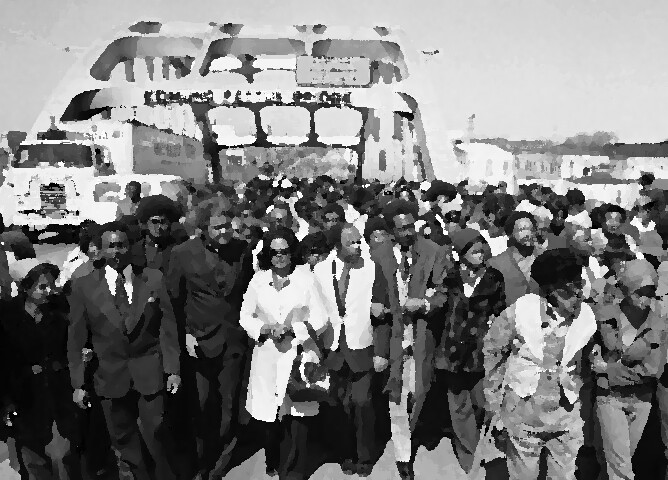
Modified image from Picryl.
Calls for systemic change have reached a deafening point in Lanwick Gasmea as 40,000 peaceful protestors marched from Shalden to the footsteps of Lannen's regional capitol building. This demonstration marks the largest mobilization of the equal rights movement in Gasmean history.
Since the turn of the decade many demonstrators, including pastor Dr. Arthur Luther Kingsley, have put pressure on the Gasmean Federal Government to enact policy granting all Gasmean citizens protections from discrimination and segregation along with the legal right to vote.
Though demonstrations have been largely peaceful, leaders have made it clear that they are not afraid to break the law. In a 1963 letter to fellow clergymen, Dr. Arthur Luther Kingsley wrote, "We hold a moral obligation to defy unjust laws, just as we hold a duty to accept the consequences of that defiance. When a person’s conscience reveals a law to be corrupt, they must break it openly, willingly, and accept the penalty. By sitting in this cell, the injustices of the unjust law become an undeniable testament to the injustices faced within our communities."
The march, which spanned five days and miles of open highway, was met with heavy resistance from local law enforcement and counter-protestors. On the fourth day, near the outskirts of Lanwick, police deployed tear gas and batons to disperse the crowd, resulting in dozens of injuries. Despite the violence, the marchers reformed their lines and continued their trek.
With growing pressure from the Gasmean public, a bipartisan coalition is reportedly drafting a bill which will grant all Gasmean citizens with the right to vote. Whether the bill can survive a promised filibuster from opposition senators remains to be seen, however with protests continuing to grow and strong favor from the progressives, the bill has a high chance of success.
Since the turn of the decade many demonstrators, including pastor Dr. Arthur Luther Kingsley, have put pressure on the Gasmean Federal Government to enact policy granting all Gasmean citizens protections from discrimination and segregation along with the legal right to vote.
Though demonstrations have been largely peaceful, leaders have made it clear that they are not afraid to break the law. In a 1963 letter to fellow clergymen, Dr. Arthur Luther Kingsley wrote, "We hold a moral obligation to defy unjust laws, just as we hold a duty to accept the consequences of that defiance. When a person’s conscience reveals a law to be corrupt, they must break it openly, willingly, and accept the penalty. By sitting in this cell, the injustices of the unjust law become an undeniable testament to the injustices faced within our communities."
The march, which spanned five days and miles of open highway, was met with heavy resistance from local law enforcement and counter-protestors. On the fourth day, near the outskirts of Lanwick, police deployed tear gas and batons to disperse the crowd, resulting in dozens of injuries. Despite the violence, the marchers reformed their lines and continued their trek.
With growing pressure from the Gasmean public, a bipartisan coalition is reportedly drafting a bill which will grant all Gasmean citizens with the right to vote. Whether the bill can survive a promised filibuster from opposition senators remains to be seen, however with protests continuing to grow and strong favor from the progressives, the bill has a high chance of success.
1965 - Telephone Call

Image modified from Pickpik
Leonard placed the receiver back onto its cradle, looking up towards Maria.
“Well? What’d they say? Did you get the job?” asked Maria, staring intently at her husband.
“I got an offer,” replied Leonard, rubbing his eyes. “Not sure how to feel about it. Six weeks’ vacation, company shares, a generous pension plan, though the pay isn’t that great. Lower than I make right now.”
“I wouldn’t worry about money, Leo. We’ve got more than we need,” said Maria, patting her purse, which was sitting next to her on the sofa. “What about the job itself?”
Leonard gazed at his notepad sitting by the pink rotary phone and recalled the details he recorded on the offer. “There’s definitely more freedom in consultancy, that I like. Nice thing is, I’ll be working more with engineering teams and less with executives. Plus, Viggo says the owner is very nice to work with.”
Leonard held his breath for a moment, “But to give up twenty-two years at Njord…”
Maria got up from the sofa and stood behind Leonard, resting her hands on his tense shoulders. “Don’t say it like that, you’re making me feel old,” joked Maria, gently kneading the tight muscles in his neck.
“Honey, we are old.”
“No-no, I’m still in my twenties!” prodded Maria, messing up Leonard’s hair.
“Bullpucky! You turn 49 in just a few months! Just wait till you turn 50, you’ll feel it then!” laughed Leonard, taunting his wife with a pair of reading glasses.
Maria gasped with dramatic offense, swatting at the reading glasses before playfully slapping his shoulder. “Hey now! At least I hide my grey better than you do!”
“Touché!” chuckled Leonard, catching her hand with a brief, gentle kiss. “But still, leaving after everything I put into that company?”
“Yeah, that is hard,” said Maria, forcing herself into Leonard’s chair before resting her head on his chest. “But I think this’ll be good for you. I mean when was the last time you enjoyed working at Njord?”
Leonard thought and thought. Nothing. Not for a while. He wanted to believe it was the sporty FB-414, but the way it ended with gutting his team and crushing the car tainted any enjoyment that was there. Even the Futaero was a disappointment in the end. Was the FB-396 facelift really the last time things went his way?
“But what about you? I don’t want to leave you alone at Njord,” said Leonard, worried.
“I’ll be fine, Leo. Besides, Mr. Ohlsson is going to retire any day now and he’s already worked with me a bunch to take over. He hasn’t forgotten the deal Hagerström made.”
Leonard shuddered at the memory, having to tell his wife - still pregnant with Mattias - that she was being demoted by Hagerström. She barely spoke for months. “Are you sure?”
“Absolutely. Worst case scenario I get the title, work a few years, then jump ship for something better.” Maria poked her finger into Leonard’s chest. “And if you take that offer, I get six weeks to bully you uninterrupted.”
“You would, wouldn’t you,” prodded Leonard. “Typical salesman, full of shit.”
“Ha ha,” Maria laughed sarcastically. “Well you’ve got the rest of the weekend to think about it. I think you should do it, but nevermind that, It’s your turn to make dinner.”
Leonard made dinner for the family: Hetvesian meatballs served with rich brown gravy, boiled parsley potatoes, and pickled cucumber salad. After dinner Maria helped Leonard clean up, then they watched their favorite television show Hyvää huomenta Jouko. As the night got late, the couple tucked Mattias into bed, then laid in their bedroom reading until they turned off the light to go to sleep.
It was now an hour until midnight and Maria was fast asleep, curled up next to Leonard who was still wide awake. He could not stop thinking about the offer. Was it really time to go? Should I sacrifice my stability for this startup consultancy, Hiuppu Engineering? He already knew the answer, he just didn’t want to accept it.
He looked over at Maria, watching her breath rise and fall like the waves of the ocean. If it wasn’t for Njord he never would have met her. Not to mention the company gave him a chance when his motorsport career didn’t work out. Leonard mulled over his thoughts, watching the shadows dance behind the bedroom curtain from a passing car. Beyond the occasional sound of activity on their residential street, there was no other sound in the house beyond the tick tick tick of the alarm clock on the nightstand.
Carefully, Leonard slipped out from under the covers making sure not to wake Maria, and quietly snuck down the hallway. The living room was bathed in the amber glow of streetlights bleeding through gaps in the curtains. He found himself back in his chair, gazing over his notebook.
I could stay at Njord, he thought. It wouldn’t be ideal, but I already know the devil there. They’ll keep rejecting my work, micromanaging my projects, pushing inconsequential choices through layers of bureaucracy, but I know they’ll do this, and I know at the end of the day I’ll still get paid. Or… I take the offer with Hiuppu Engineering, solving real problems with real people instead of corporate bootlickers. Maria was right - they had enough money - but the pay cut still stings.
Leonard looked down the hall where Maria slept. It wasn’t just me, he thought. Njord has put Maria through the wringer, too, and she was resilient. She survived Hagerström’s blunder and outlasted the bastard. She was about to take over Ohlsson’s department because she was too damn good to be ignored. If she could survive all of that and still tell him to take a leap of faith, what was he actually afraid of?
Letting go. I am afraid of letting go. My youth. Ambition. Blood, sweat, and many, many tears. Letting go of Njord would mean letting go of who I am.
Leonard pondered at the thought, flipping through the pages of the notebook, then muttered, “Who am I kidding? That was yester-year.” He leaned back into the armchair, feeling the cool cloth on his bare skin. There’s a reason I even started looking elsewhere anyways. The fact of the matter is I’m not happy at Njord, and I have not been happy for a long time. The best time to leave was about five years ago when Hagerström retired, the second best time is now.
Leonard picked up a pen from the side table and flipped through the notebook until he came to a clean page. He began writing a draft of his resignation letter. He kept it clean and concise: a three month notice, thanking his boss Mr. Bendel for the opportunity, and an acknowledgement to his twenty-two year long legacy. As he penned the final line, a sudden, profound sense of lightness washed over him. The end of a long chapter into a fresh, new beginning.
He capped the pen and stood up, his knees making a loud pop on the ascent. Damn, he thought, giving a light chuckle to Maria’s earlier teasing. We really are getting old.
Leonard tiptoed back down the hallway and slipped into the bedroom. The rhythmic sound of Maria’s breathing instantly grounded him. He crawled back under the blankets, careful not to disturb her sleep. As he settled in, Maria stirred, murmuring something incoherent as she shifted closer, resting her arm across his chest.
He closed his eyes, listening to the steady rhythm of her breathing, and for the first time in years, Leonard fell asleep with a smile on his face.
On the Morning of Tuesday
Everything had been prepared. Leonard had typed and polished his resignation notice, neatly folded and sealed in an envelope addressed to CEO Caesar Bendel. He had also accepted the offer from Hiuppu Engineering with a start date in four months.

Now was the hard part. Leonard would have preferred to meet his boss on Monday, but never got a response back. Oh well. Fortunately they had their 07:30 weekly one-on-one on the calendar already.
Early Tuesday morning, 07:00, Leonard and Maria pulled into the Njord Automobile parking lot in their trusty FB-396. The sun had barely crested over Mont Apinac and the morning air was brisk. The trees in the parking lot were red and orange and had begun shedding their leaves.
The two got out of the car, each taking out a briefcase, and closed the doors with a sturdy thud. They both walked together to the front of the building and entered through the glass doors. They were immediately hit with the familiar smell of stale air and drab grey tile flooring.
“You’ve got this, Leo,” said Maria, giving her husband a kiss. “Let me know how it went at lunch.”
Maria left towards the marketing department while Leonard made his way towards the break room to make some coffee. The coffee wasn’t very good, mind you; it was closer described as bean water, but any kick-in-the-pants was appreciable so early in the morning. Leonard dumped out yesterday’s coffee from the kettle and brewed a new batch, pouring it into a small paper cup. Once completed, he made his way towards the CEO’s office while checking his watch. 07:20, a little early.
Leonard waited patiently as he sipped his coffee, the hot, bland bitterness breaking up the morning breath when Mr. Bendel came into view.
“Good to see you, Mr. Hansson. Let’s go ahead and start now, I’ve got another meeting I need to get to after this one.” The CEO flipped through his keys and unlocked the office door. “After you.”
Caesar and Leonard entered the office, the large windows giving a faint view of the engine factory’s smoke stacks far in the distance. Caesar sat down at his desk, gesturing to Leonard to sit across. “So, Mr. Hansson. Give me a rundown on your department’s metrics. Are we hitting our productivity targets?”
Leonard didn’t answer, instead handing the CEO the envelope tucked in his shirt pocket.
“What’s this?” asked Caesar, grabbing the envelope.
“It’s my three month resignation notice. My last day will be April 29th, 1966.” Leonard paused for a second, recollecting what he had rehearsed in his head over and over. “I would just like to say it has been an honor working with you, and that I’ll help with training, project transitions, and any other requests.”
The CEO looked at the envelope, not giving Leonard so much as a glance, then set the letter aside on the desk. He got up from his chair and walked toward the front of the private office, opening the door. “Follow me, Mr. Hansson.”
Leonard was flabbergasted. Was he? “Mr. Bendel, I-”
“Now, Mr. Hansson,” pointed Caesar, sharply.
Leonard has no choice. He got up from the chair and left the office with the CEO leading. They stopped by a cabinet full of paper where the CEO handed Leonard an empty box, then they entered the design office where some of Leonard’s team members were getting started for the day. One of the team members was about to say something to Leonard when the CEO’s stern voice interrupted the thought.
“I’ll give you fifteen minutes to gather your belongings.”
In awkward silence, Leonard went through his desk drawer by drawer, putting various items in the box. Some dusty awards he had forgotten to bring home for years, family photos, and some of his personal drafting tools. Once completed, he turned around and faced the CEO.
Caesar straightened his tie, then ordered Leonard out. “Your services are no longer required. Hand over your keys and identification badge. You are not to return to the premises. As per Hetvesian law, you will receive your final paycheck at the end of your three months.”
Leonard would not get anything else from the CEO. No parting recognition. No chance to tell his team goodbye. No handshake. Just as quick as Leonard started the day, he was now outside on the curb of the Njord Automobile headquarters, box of possessions in hand. The air was cold, and the road in front of the building had more activity from the rush hour traffic.
“Well,” murmured Leonard. “Now what?”
4 Likes
It would be interesting if while at that new firm, Leonard plays a role in making some sort of concept car (of course, if you have time).
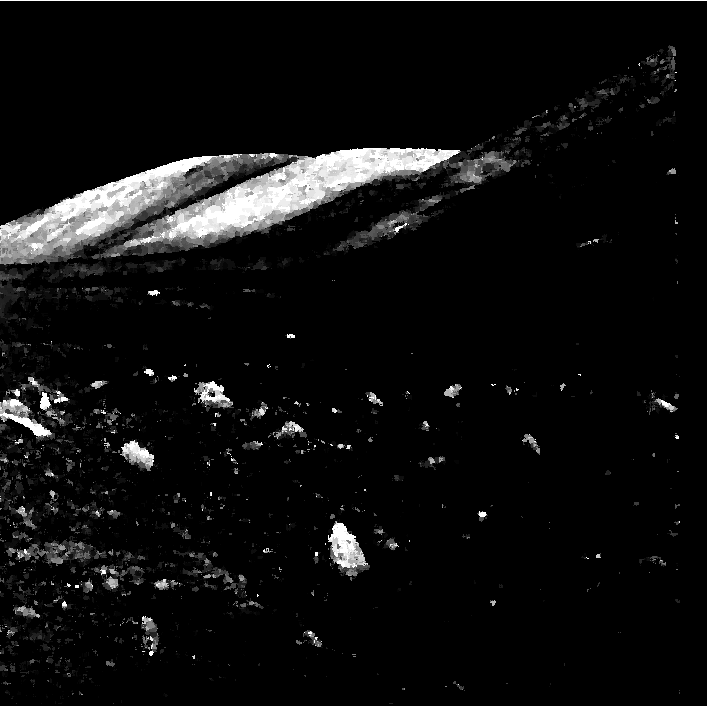
Modified image from NASA.
The Archanans have done it again, beating out Gasmea's ISEA program to the moon.
The space race has been heating up rapidly with Archana in the clear lead. Just last year the Archanans completed the first successful spacewalk with cosmonaut Mukhov Pavlovich, where he exited the Zakat-2 spacecraft for 12 minutes in the vacuum of space. Gasmea was three months behind when they completed their 22 minute spacewalk with astronaut Aaron Grant in Volantis-4.
Archana's latest mission, Khors-8, successfully landed the first probe on the surface of the moon. Valuable science was gathered, the feature piece being some of the first images of the moon's surface, including a panoramic view of the rough lunar rock formations. Surface radiation samples were also captured.
"ISEA will be landing a probe to land on the moon with a target May launch," said ISEA chairman Daniel Collins. "What we have learned from observing the Archanan's mission has been valuable for our program. They have shown that the moon's surface is potentially stable enough to support a lander."
The ISEA probe will be fitted with strain gauges and a television camera to test the moon's surface for supporting a larger lander.
The space race has been heating up rapidly with Archana in the clear lead. Just last year the Archanans completed the first successful spacewalk with cosmonaut Mukhov Pavlovich, where he exited the Zakat-2 spacecraft for 12 minutes in the vacuum of space. Gasmea was three months behind when they completed their 22 minute spacewalk with astronaut Aaron Grant in Volantis-4.
Archana's latest mission, Khors-8, successfully landed the first probe on the surface of the moon. Valuable science was gathered, the feature piece being some of the first images of the moon's surface, including a panoramic view of the rough lunar rock formations. Surface radiation samples were also captured.
"ISEA will be landing a probe to land on the moon with a target May launch," said ISEA chairman Daniel Collins. "What we have learned from observing the Archanan's mission has been valuable for our program. They have shown that the moon's surface is potentially stable enough to support a lander."
The ISEA probe will be fitted with strain gauges and a television camera to test the moon's surface for supporting a larger lander.
1966 - Maria's Promotion
The months following Leonard’s sudden departure from Njord could be summarized as a chaotic frenzy of repositioning. After Leonard’s three-month garden leave, Caesar Bendel placed one of the most tenured engineers from the team as the New Head of Design. However, after just a few months the new manager stepped down from the position, leaving the engineering department without a leader. While the company searched for an ideal candidate to take over the Head of Design position, Caesar Bendel would temporarily manage the duties of the position alongside his responsibilities as CEO.

The shake up was also happening in the marketing department. Just as Maria Hansson had predicted, Head of Marketing Filip Ohlsson put in his notice of retirement leaving the position up for grabs. Maria knew she was a shoo-in for the position - Ohlsson had been having her shadow and even took over some of his tasks while he ramped down his workload towards his final days. It was just a matter of time before the announcement would be made official.
For Maria, today was like any other day at work. She would start her day looking through and responding to her office mail. Then, she would review the Gasmean awareness survey results with Jensen Newman and her peers, noting that current awareness had increased considerably to around 9% with a projected 2% annual growth trend. After this, she would make some phone calls with dealerships in Ellisbury, Springvale, and Tannenstein, taking notes on what customers liked and disliked with Njord’s cars to pass on to the engineering department. She had a small lunch afterwards - strawberry yogurt with some granola - then chatted with some coworkers for about an hour about work, the weekend, vacation plans.
Returning to her desk, Maria began organizing the dealership comments into an affinity diagram, mapping out sticky notes on a large chalkboard. She was deep into her workflow when Mr. Ohlsson quietly stopped by her desk, letting her know that Mr. Bendel had called for an announcement meeting at the end of the day with the marketing team. She strongly detested the CEO, especially how he treated her husband Leonard during his last days at Njord. Taking on the Head of Marketing position would mean he would become her new boss, which she was not a fan of but needed to advance her career.
The rest of the day seemed to crawl afterwards. Maria had finished the diagram, which she passed on to engineering, but didn’t have much to do for the rest of the day waiting for the upcoming meeting beyond doodling and eavesdropping on her coworkers office gossip.
Eventually, 16:30 rolled around and Maria found herself sitting with her peers in a meeting room with the CEO talking at the front. The meeting went through the usual beats: congratulating the team on selling over 14,000 cars over the last year, plans on major expansions with the increasing profit margins, and hyping up the team with the announcement of a new car beginning development.
“We’ve got some big plans coming down the line,” boasted the CEO. “But that is not why I’ve called you here today. As you all are aware, Mr. Ohlsson has announced his retirement. Mr. Ohlsson has been a foundational cornerstone of the Njord Automobile family, and his accomplishments over his eighteen years of tenure will be sorely missed. He has been instrumental in growing the brand from a little Hetvesian operation into an international operation. And to that I applaud you, Mr. Ohlsson, and I wish you a well-deserved retirement.”
The room applauded, giving Filip a standing ovation. The old Head of Marketing nodded gracefully.
Caesar continued, “With Mr. Ohlsson stepping down, we must now look into the future for our company. Our penetration into the Gasmean market has proven to be successful, but now it is time to begin our takeover. What this team needs is a visionary, someone who knows not just our home market but Gasmea’s tastes.”
Maria quietly squared her shoulders. This was the moment.
“Therefore,” Bendel said, his sharp grey eyes scanning across the room. “I would like to announce our new Head of Marketing, Jensen Newman.”
For a fraction of a second, she thought she misheard him. The room erupted into a sudden burst of applause, led by Filip Ohlsson, who looked just as blindsided as she was. Maria didn’t applaud. Her hands remained frozen, her fingernails pressing hard into the briefcase on her lap, dimpling the leather. She looked at Jensen; the young Gasmean looked genuinely surprised. He hadn’t known either.
“Jensen’s record at General Autos speaks for itself,” Caesar pointed, his voice overpowering the applause in the room. “And his ‘Straight Talk’ campaign has proven exactly what this company needs to transition from a regional player into a dominant global force. He represents the synergy of international insight and modern execution.”
Maria’s mind raced, a toxic mixture of humiliation and fury flooding her chest. Sixteen years. Sixteen years she had sacrificed for this company. She took the brunt of Hagerström’s blunders, had practically run the marketing department over the last two years, and built the very logistics network that gave the ‘Straight Talk’ ad campaign any ground to stand on. Was this because of Leo leaving? There was no way to prove it if it were.
When the meeting adjourned, the room dissolved into the predictable flurry of congratulations. Peers swarmed Jensen, patting his back and offering hearty handshakes. Maria stood up slowly, her briefcase in hand, fighting to keep her face expressionless.
Filip Ohlsson intercepted her before she could reach the door, his expression heavy with guilt. “Maria, I… I had no idea,” he whispered, looking around to ensure the CEO was out of earshot. “Caesar didn’t consult with me, he made the executive decision last week. I am so deeply sorry.”
“Doesn’t matter now, Filip,” Maria replied, her voice dangerously calm as she gripped her briefcase hard. “What’s done is done.”
She didn’t wait for his response. She walked out of the room, her heels making a brisk cadence of clicks down the headquarters hallway straight towards the front exit. As she opened the door to leave, she heard hurried footsteps behind her. “Maria! Wait!”
It was Jensen. He looked uncomfortable, pulling at his collar as he caught up to her near the glass exit doors. “Look, Maria, I didn’t ask for this. Caesar called me into his office twenty minutes before the meeting and dropped it on me. I told him you were the logical choice, I swear.”
Maria turned and looked at him. She didn’t hate him, he was brilliant at his job after all. He was just an unfortunate middleman who was used by Caesar to toss her aside.
“You’re going to do a great job, Jensen,” said Maria, her voice direct and devoid of warmth. “You’re what the company needs right now.”
“Maria, come on, don’t be like that,” Jensen pleaded, looking genuinely pained. “I never meant for this to happen, it should have been you.”
“Congratulations on the promotion, Jensen.” Without another word, she turned and stepped through the exit doors into the cold Hetvesian winter evening.
The frigid air bit at her face, carrying the smell of musty dead leaves rotting in the ditches. She walked across the asphalt to the parking lot where her trusty, faded FB-396 sat waiting. Maria got into the driver’s seat, closed the heavy door with a solid thud, and rested her forehead against the steering wheel. A lone tear slipped down her cheek, but she aggressively wiped it away with the back of her hand while turning the key.
She drove off through town streets and country roads, the Njord Automobile headquarters fading from the rear view mirror until she parked on the street in front of a brick townhome. The living room lights were on. Leonard was back home from work.
She walked through the front door, the scent of fresh coffee and roasted meat instantly wrapping around her like a blanket. Leonard was standing by the stove, a dish towel slung over his shoulder, looking more relaxed and youthful than she had seen him in a decade. He looked up, a bright smile on his face that instantly faltered when he saw the look in her eyes.
He set down his spoon. “You ok, Darling?”
Maria dropped her suitcase, buried her head into Leonard’s shoulder, then broke down in tears.
6 Likes
This clearly sets up the arc where Leonard and Maria work at a niche startup car company (possible small campaign idea?). My guess for Njord is that they’ll make a bigger, mushier car for Gasmea that’s not as “sharp”.

Modified image from Wikimedia.
Rock and roll pop sensation band The Turtles has completely sold out of tickets within two weeks of their announcement of the "Love Cruise" world tour, beginning 26 March in Willburg, Gasmea and ending in Terso, Fruinia on 23 July. For Hetvesia, the band is scheduled to perform in Berlau from 24 to 26 June and in Zeilwies from 30 June to 2 July with supporting performances from Flowstate, Tricks of the Generation, and The Caliden Inquisition.
The Turtles, a four man band with the "core four" Braden Hicks, Freddie Jenkins, Charles Walsh, and Tatum Quinn formed in Hollymore, Gasmea in 1960 and has quickly become the dominating force on music charts across the globe. Their latest album "Birthday Suit" released late 1966 has already reached 6x Platinum and is on track to go Diamond by the end of the year.
Local ticket vendors in Berlau reported lines stretching over four blocks, with eager fans camping overnight despite unseasonably brisk winds. "I stood in the snow for fourteen hours," said Martha Vance, 19, of downtown Berlau. "But it's worth it if Tatum Quinn sees me. He's such a dreamboat."
When asked about the overnight success of the tour, lead vocalist Braden Hicks expressed humility. "We just wanted to make music that makes people feel alive, man. The love we are receiving from our fans is just groovy, and we can't wait to share the love with you."
The Turtles, a four man band with the "core four" Braden Hicks, Freddie Jenkins, Charles Walsh, and Tatum Quinn formed in Hollymore, Gasmea in 1960 and has quickly become the dominating force on music charts across the globe. Their latest album "Birthday Suit" released late 1966 has already reached 6x Platinum and is on track to go Diamond by the end of the year.
Local ticket vendors in Berlau reported lines stretching over four blocks, with eager fans camping overnight despite unseasonably brisk winds. "I stood in the snow for fourteen hours," said Martha Vance, 19, of downtown Berlau. "But it's worth it if Tatum Quinn sees me. He's such a dreamboat."
When asked about the overnight success of the tour, lead vocalist Braden Hicks expressed humility. "We just wanted to make music that makes people feel alive, man. The love we are receiving from our fans is just groovy, and we can't wait to share the love with you."
1967 - Ski Trip

Image modified from Devon McClellan
Lucky, Jensen thought. Storm must have kept the crowd at home.
He sighed relief, watching the vapor from his mouth condense into the air like steam from a kettle. It had been a while since he’d had a moment to himself with the surprise promotion. The extra money was nice; however, he never intended to get into a management position again after moving to Hetvesia. He just wanted an easy job to fund his hobbies.
The chair made a gentle swing climbing through a set of sheave wheels, making a gentle squeak that was quickly muffled by the mountain snow. Jensen instinctively grabbed onto the safety gate, feeling the icy metal pierce through his woolen gloves.
Maria made things even more complicated. He felt bad for her. He understood why she’d checked out from her job, even though covering her drop in performance was getting harder to hide from his boss. The worst part was the beginning, when he’d needed her help to grasp his Head of Marketing duties. There was a cruel irony in forcing a woman to train her former student for the very promotion she’d been denied.
I’ll do what I can, but she’s going to need to pick herself up soon. I do not want to be the one who has to fire her. Jensen shuddered at the thought.
Ahead through the fog the chairs were passing much closer to the blinding white ground below. Jensen could hear some commotion ahead through the cold winter air. “Looks like this is my stop,” he muttered to himself.
He leaned over and brushed the newly accumulated snow from his backpack beside him, then looped one of the straps around his shoulder. He fumbled around a bit with the safety gate latch – he could barely feel anything through the tingling numbness in his fingers – then in a swift, fluid motion jumped off the chair into the cool ground below. His skis sunk into the fresh dry powder, making an audible crunch as his body weight settled into the surface. A quick check-over was performed: gloves, goggles, bag, poles, everything was accounted for. All set, he noted. The only thing left behind were his thoughts about work. Those can stay with the chair.
There were some teenagers who were chatting near the lift’s departure point who had paid no attention to Jensen’s arrival. They must have been out since sunrise judging by the powder stuck to their coats and the big plumes of vapor puffing from their faces. At least there were people on the mountain. The last thing Jensen needed was to get lost in the fog.
Jensen waited by the lift a short distance from the group until they began to set off, himself in tow. They slid away from the lift until the twanging metal cables were barely audible and the tree line towered to their left. The powder was soft and silent, winter unbroken with an occasional grunt as skis cut through the snow. Jensen weaved left and right around trees and broken branches, tossing powder onto the surrounding grey bark.
After some time, the voices of the teenagers drifted down the hill until Jensen was alone, carving down the slope and jumping over snowbanks. He let them stay just far enough ahead that he could make out their jackets through the frigid fog. As long as they stayed within view, and the tree line flanked his left, he’d find his way back to the lodge.
Jensen leaned back, his skis floating over the bumps and dips from the group’s wake, then turned his ankles and shot around a fallen tree. The fog was starting to lift as he made his way down the slope, some warm streaks of morning sunlight casting through the cloudy white vapor. Finches were waking up and fluttering in the tree branches above. Their morning song filled the muffled mountain ice and snow.
It had been a long time since he had been able to get away – it had been almost two years since Jensen’s skis had seen snow. He thought about the early days when he first moved to Hetvesia, carving around Reimsee on his cafe racer in the summer and down the slopes of Adelberg and Eckergrat in the winter. Lately the only white he had been able to see was the pile of paperwork on his desk, and that mountain was one he could not have cared less to carve down.
Sliding around a ramp and over a set of snowbanks the resort’s cabin lodge poked through the leftover fog. It was a large wooden building; a grand A-frame with massive windows centered between two wings. The North wing was small with no windows and a couple metal roll-up doors, one open door housing a pair of snowmobiles. The South wing had to be about 30 meters long and had a long row of windows and balconies. The roof was caked in snow with icicles hanging from the green gutters, twinkling as sun rays passed through breaks in the clouds.
Jensen had made it to the bottom, and in good timing too; he had worked up quite an appetite on his way down and remembered there was a small breakfast cabin just a few kilometers down from the resort. All he had to do was get to his room, leave his skiing gear, then make his way down to his car and drive there. Except by the time he made it to his car it was pretty clear he would not be doing any driving anytime soon.
The entire parking lot was buried under about 40 centimeters of snow. There was no way Jensen was going to be able to get his company FB-414 down to get food, let alone even leave the lot. It was either skiing his way down or having granola bars for breakfast.
“Hmmm,” sighed Jensen. I should have thought about that before I took my skis off.
He shuffled his way back to his room, put his ski gear back on, and gnawed down some bars and jerky to stave off his hunger on the journey down. He did not want to think about his trip back up after breakfast; the coffee was practically calling his name. He left his room with skis and poles over his shoulder, went through the center clubhouse, then came back out to the parking lot.
Parked next to the front entrance was a bright red car he had not seen before. A ’57 Ergene Alono with the estate body. The front had added foglights and a spotlight on the driver A-pillar, and the added roof rack on top was holding two sets of skis. The door had a painted white cross with stenciled text on the side reading *Eckergrat Skidanläggning*. Jensen had seen quite a few Alonos puttering around since he had moved to Hetvesia, and why wouldn’t he? Ergene had produced a ton of them since the mid 50s up until just a few years ago, and if you could afford a new car there was a good chance you could afford an Alono. They weren’t a direct Njord competitor – their cars were a bit more down market – but that didn’t stop them from becoming one of the top selling cars in Hetvesia.
Except this wasn’t just any old Ergene; this one sat much higher and had large, knobby tires. And unlike any of the other cars still stuck in the parking lot, this one could drive just fine as evidenced by the trail behind leading toward the road.
“There’s no way,” Jensen said to himself. “This’d have to be a 4x4 to do that.”
“It is a 4x4, Sport.”
Jensen turned around to see an older man with a long white beard. He wore a thick red flannel with black snowpants and had what used to be an animal turned into a hat. He stood near a newspaper stand and was digging in his pocket for cigarettes.
Jensen gave the old man a doubtful look. He had to be pulling his leg. But the old man had evidence. “Go on, give ‘er a gander on the under if ya don’t believe me.”
Jensen squatted down beside the car and looked underneath, and sure enough the old man wasn’t lying. Unlike the factory Alono, this one sat atop a leaf-sprung live axle front and rear, each with its own driveshaft leading towards the gearbox.
“This is far out, man!” said Jensen, hopping back on his feet. “I *have* to know the story behind this.”
“Well lucky ‘fer ya, you caught me on my break, Sport. Gonna cost ya a cigarette though,” the old man quipped as he patted his chest pocket.
Jensen pulled out a carton from his pocket – a pack of Slothmans – and handed it to the old man waiting with a lighter. When he grabbed his cigarette, Jensen also took one out and lit the end with his lighter. The heat from the cigarette radiated warmth onto his face and melted the ice that was forming on Jensen’s nose hairs. The two men took a long drag, feeling the kick of nicotine, then blew out a puff of smoke.
“Mighty thanks there, Sport,” said the old man. “The name’s Mooses. You?”
“Jensen,” he replied, shaking Mooses’ calloused hand. “So let’s start with how.”
Mooses took another drag of his cigarette. “Well ya see, this isn’t actually an Ergene Alono. No, it started its life as a Hiers GP-5, same one Gasmea used to win the war. This one got sold to a few different owners before we got our hands on it about… oh I don’t know, three years ago?”
“So why the Alono body? Wouldn’t the GP-5 body work?” asked Jensen.
“Give me a minute, Sport. Let me tell the story.”
Mooses coughed a few times; Jensen wondered if the old man hacking up a lung was a hint from a higher power that he should stop smoking.
“Where was I?” Mooses pondered while wiping his beard. “Ah, yes. When we got that 4x4 the body was rusted to hell – sitting out in the cold didn’t help none either. That’s when my buddy Kimmo – rest his soul – got the idea ta rip the body off and weld on a new body, somethin’ a bit more insulated from the elements. It’s better now, though the ol’ bastard forgot to hook up the heater!”
Mooses laughed hard, his laugh turning into another coughing fit before continuing, “Found the body in a yard, decent condition with little rust. Had to cut the shit outta the chassis tunnel ta make ‘er fit, ‘an the welds ain’t pretty, but it sure beats a frozen beard. Great fer trips up ‘n down the mountain.”
Mooses took one last drag from his cigarette, savoring the smoke, then slapped his knees with a big exhale. “Welp, that’s that. I’ve gotta get back to work. You enjoy yerself, Sport. ‘An mighty thanks fer the smoke.”
“Anytime, Mooses. Pleasure to meet you, and thanks for the story.”
Just as quickly as the old man appeared, he was now gone, leaving Jensen alone standing in front of the car.


What a machine, thought Jensen. He sat down on a bench nearby and started putting his skis back on. A 4x4 with the comfort of a car. He pushed his right boot into the front bind and stepped down until he heard a click. It can cruise down the road on a normal day, then climb through a trail when it needs to. He pushed his left boot down, hearing a click. You could just have one car. Then his mind clicked.
A car you could drive to work or the shop on weekdays, and the ski resort or camping on the weekends.
Jensen jumped up from the bench and quickly fell over. He scrambled to pop his boots out of the bindings and sprinted to a telephone in the resort lobby.
“Hey, is this the engineering department?” stammered Jensen.
“…Yes?” answered the receiver.
“It’s Jensen. How far are you guys with the ND?”
There was a pause. Jensen could hear some shouting in the background through the receiver. “Not too far, we just got a draft for the unibody. Why?”
“Do you think we could fit another driveshaft?”
6 Likes
Very similar story as to how Audi’s quattro got approved! Perhaps Njord isn’t lost, despite the innovation brains gone…
2 Likes
Let’s see what Njord comes up with!
1 Like